

Any underground structure is exposed to far more sustained water pressure and moisture than those above ground. The ability to withstand this pressure is vital for below-ground structures to perform as intended, whether a HVAC plant room, a railway tunnel, or a reservoir. Waterproof concrete reduces the chance of pores forming, which would otherwise compromise the integrity of the structure. As a result, this type of concrete forms an imperative part of any specification for a watertight system.
How waterproof concrete differs from standard ready-mixed concrete
At first glance, standard ready-mixed concrete appears to be a solid material. However, it contains microscopic pores that allow the passage of water over time. That’s because ‘spare’ water evaporates out of hardened ready-mixed concrete over time, which then forms these pores.
In many applications of standard concrete, these pores are desired - they help achieve the required fluidity or slump of the concrete. Yet for concrete used in below-ground structures, these pores are an issue. They allow water to move through or penetrate the concrete, which can lead to issues including:
- Internal cracking
- Water seepage and leakage
- Damp patches
Waterproof concrete uses a two-stage design method to prevent pores from forming:
- The water to cement ratio is reduced, so less water is used in the concrete mix. This means there’s less water available to evaporate out of the hardened material, which would otherwise allow pores to develop.
- Where pores are present, a specialist admixture is used to fill or block them and prevent the passage of water. Admixtures are available as a liquid or as a powder.



Concrete volume calculator
Use our ready-mixed concrete calculator to select the best concrete for your project and work out the volume you require.
How waterproof concrete improves the durability and longevity of below-ground applications
Concrete is an inherently durable material, but water ingress can require complex and expensive remediation. Reducing the concrete’s vulnerability to pores is only one part of the picture of waterproofing an underground structure.
When water infiltrates the concrete itself, corrosion of steel reinforcement can occur. Water passage through a concrete element over time can lead to water entering the below-ground structure, which can compromise its durability. Neither of these scenarios are desirable.
BS 8102 (Protection of below ground structures against water ingress: Code of practice) sets out a range of measures that can be used to prevent water ingress (for example, from external groundwater, soil moisture, and leaks) from entering underground spaces into structures. Couple these with careful design, the inclusion of waterproofing admixtures, and joint-sealing water-bars (and where necessary, waterproofing membranes), and a fully watertight structure can be created.
This increases the concrete’s resilience even further and, as a result, omits the risk of water ingress along with any associated damage and repairs.
Heidelberg Materials Concrete technical department
Heidelberg Materials Concrete operates regional technical teams across the North, Central and South of the UK. Our experienced, mobile quality control Technicians visit sites to obtain test samples for our rigorous internal quality control system and are always on hand to offer professional advice.
BS 8102 waterproofing types and grades
As well as recommendations of preventive strategies for stopping water ingress, BS 8102 provides essential guidance on the design and risk assessment of below-ground structures. Different levels or ‘grades’ of waterproofing are required by different applications. This British Standard gives three grades of waterproof environment (ordered by the risk of damp in that environment) alongside three methods (known as ‘types’) of achieving each waterproofing grade.
Contact Details
Regional numbers
For sales quotes and orders please select from the following:
Waterproofing by grade
Grade 1
Areas where some damp may be tolerable are covered by Grade 1 - for instance, underground car parks, plant rooms, and workshops. Waterbars will commonly be used with the waterproof concrete to construct the walls and floors in these environments to minimise the risk of damp.
Grade 2
Grade 2 requires a totally dry environment and is for areas such as retail storage, electrical and plant rooms. In these instances, it’s common to use two methods of waterproofing to provide a secondary form of defence against water ingress.
Grade 3
Grade 3 waterproofing is designed for habitable residential buildings, commercial outlets and archive areas. At least two types of waterproofing (outlined below) usually need to be used to achieve Grade 3. Insurance companies such as NHBC often insist on a dual-system approach like this.
Waterproofing by type
Type A waterproofing
Type A waterproofing involves the use of membranes around the underground portion of a structure. For instance, carefully sealed, heavy-duty damp-proof sheeting.
Heidelberg Materials' Gold waterproof concrete option meets the Type A waterproofing grade and is offered with a 25-year warranty via our waterproofing partner, Sika.
Type B waterproofing
Where waterproof concrete is used, Type B waterproofing refers to sealing the concrete’s joints with various types of waterbar. This is a physical barrier placed between two sections of concrete to prevent water getting through the gap.
Heidelberg Materials' Gold, Silver and Bronze waterproof concrete options all meet the Type B waterproofing grade. Gold is offered with a 25-year and Silver is offered with a 15-year warranty via our waterproofing partner, Sika.
Type C waterproofing
Cavity drain systems are utilised in Type C waterproofing. They’re commonly applied to the refurbishment of old structures, where it may be impossible to identify all sources of water entry to the structure. The cavity drain system forms an internal barrier between the outer walls and the inner drylining (plasterboard), with water channelled to the base of the structure before it’s released into the drains.
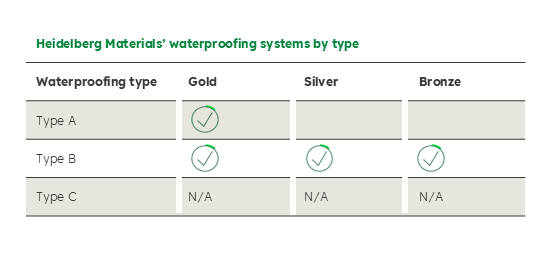
Choosing the right waterproofing method for an underground structure
It’s important to note that all three types of waterproofing can be used for all three grades of waterproofing - they can be mixed and matched to suit the needs of the structure. But if your build needs to comply with the NHBC’s (National House Building Council) requirements for a Grade 3 environment, at least two types of waterproofing must be used. (The NHBC is the UK's leading provider of warranty and insurance for new-build homes.)
Heidelberg Materials’ ‘Gold’ waterproof concrete system meets these requirements. The system combines our waterproof concrete and a Sika waterbar, with the addition of a Sika membrane. The Heidelberg Materials’ watertight* system is offered with a market-leading warranty of 25 years (via Sika). We also provide ‘Silver’ and ‘Bronze’ systems, which are detailed further down in this article.
*Watertight = a fully impermeable structure.
Case studies
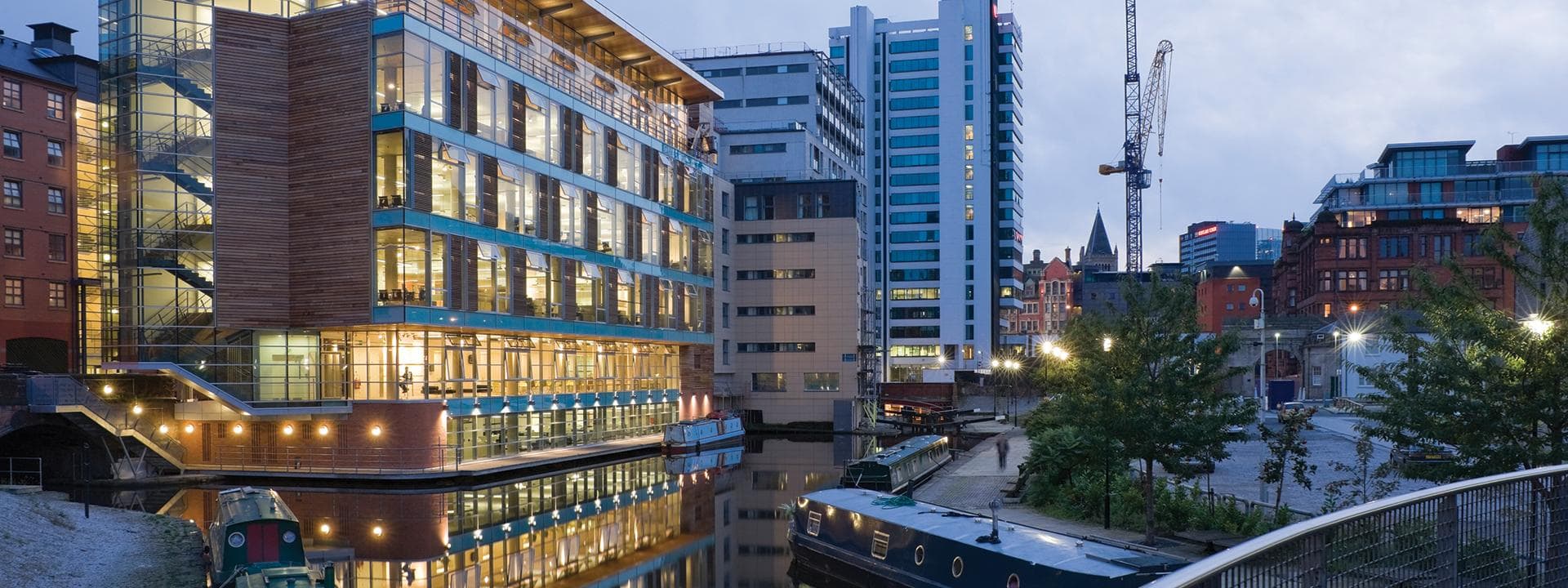

Building Design Partnership Studios, Manchester
We supplied waterproof concrete during the construction of the new BDP (Building Design Partnership) Studios in Manchester to ensure a dry basement that conforms to BS 8102 Grade 4.
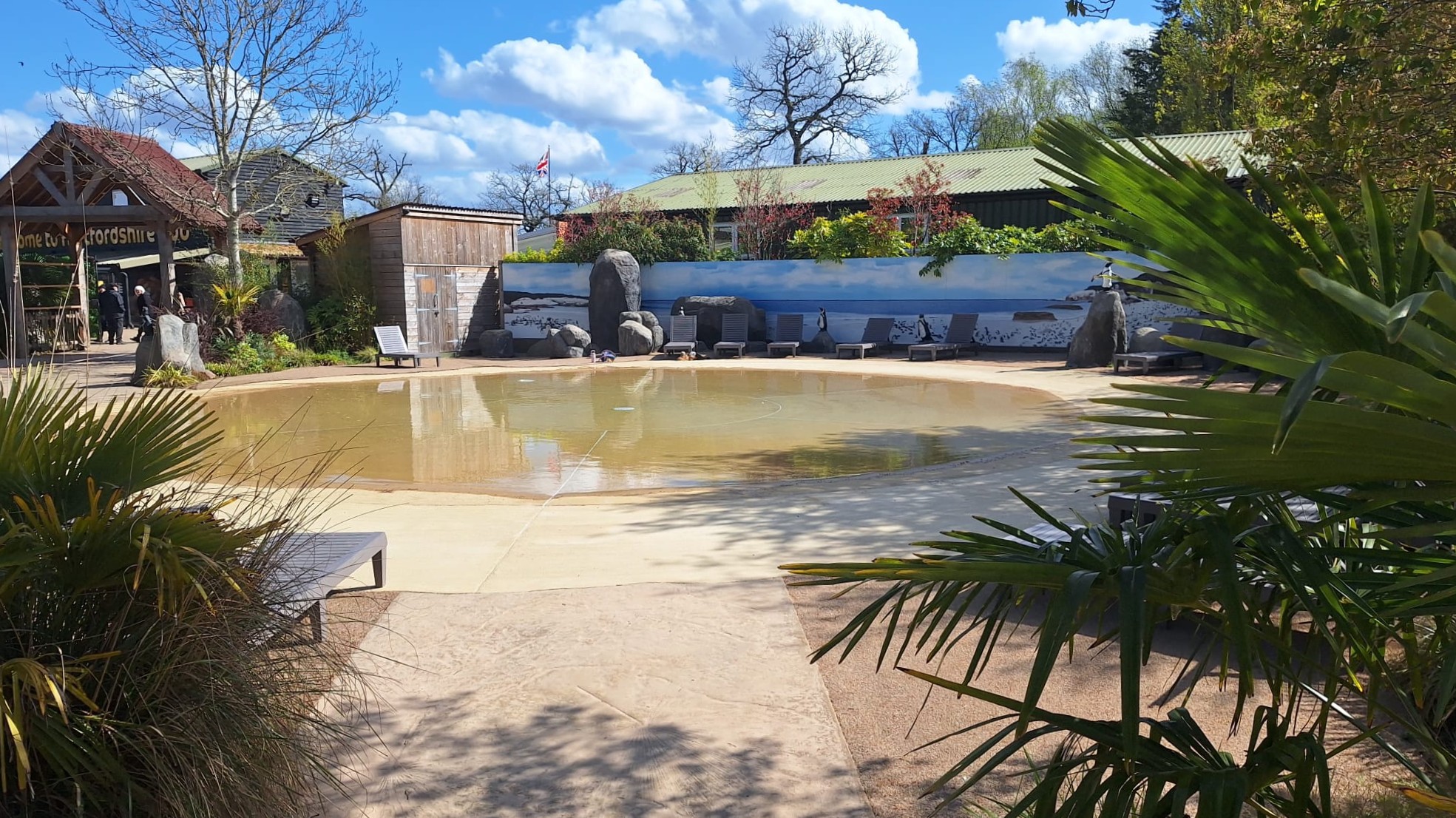

Hertfordshire Zoo
We provided around 30 cubic metres of our bespoke waterproof ColourCrete to refurbish Boulders Beach Splash Park at Hertfordshire Zoo, helping to revitalise one of the zoo’s most popular visitor attractions.
Waterproofing regulations for building insurance
It’s not only the NHBC that has strict requirements for waterproofing below-ground structures, but Premier Guarantee, too. Premier Guarantee provides structural warranties for new homes. To reduce the risk around their insurance warranties, both companies provide regulations that reference British Standards and codes of practice.
NHBC compliance
NHBC Standards Chapter 5.4 directly references BS 8102:2022 as the definitive code of practice for protection against water ingress. Compliance requires:
- An integrated waterproofing design
- Specialist input* early in the design phase
- Mandatory dual-system protection for high-risk habitable spaces
*Typically, this refers to a professional who holds the Certified Surveyor in Structural Waterproofing (CSSW) qualification from the Property Care Association (PCA). Through our partnership with Sika, CSSW-qualified specialists are available to support the design of watertight structures.
Premier Guarantee compliance
The provider of structural warranties for new builds also requires full alignment with BS 8102 for all structural waterproofing and basement designs, but it doesn’t specifically require a dual-system solution. To comply with Premier Guarantee, our Silver or Gold waterproofing systems are used.
Dumfries and Galloway emergency care department
Our Gold Waterproofing system was used to build the foundations of a new £270 million district hospital in Scotland.


Guildford Sewage Treatment Works
We worked with BAM Enpure JV and Sika to deliver a watertight concrete solution for above‑ground treatment structures as part of the Guildford Sewage Treatment Works relocation. By supplying a total of 660 m³ of waterproof concrete with Sika products, we enabled durable, low‑permeability tanks that meet Thames Water’s rigorous standards.
Heidelberg Materials’ waterproof concrete systems
We launched our Gold, Silver, and Bronze ranges of waterproofing solutions in the UK over 10 years ago, with each one underpinned by our 25-year partnership with Sika. Together, we’re able to provide unparalleled support for structural engineers and architects at every stage of the specification process, considering design, construction methods, and increasingly, sustainability.
Though our three waterproofing solutions are classed as Bronze, Silver and Gold, all options consist of the same specially designed waterproof concrete that’s been designed to form part of a watertight system. The concrete mix we supply stays the same (MCC 350/WCR 0.45) across all ratings, too, unless a more durable specification is required.
For the full details on each system, view our waterproof concrete solutions page.
Waterproof concrete with reduced embodied CO₂ emissions
We can also design waterproof concrete for underground structures with a reduced carbon footprint. There are two ways we do this:
With evoBuild concrete.
evoBuild is our low carbon concrete. It makes specifying more sustainable concrete easier and helps to target carbon reductions in construction. evoBuild low carbon concrete offers a CO₂ reduction of at least 50% compared to a fixed Global Cement and Concrete Association (GCCA) reference value*. All evoBuild low carbon concrete mixes offer the same quality and performance levels of traditional concrete, but with significant sustainability benefits.
By incorporating evoZero carbon captured near-zero cement into the concrete mix.
The world’s first carbon captured near-zero cement, evoZero, is produced using carbon capture and storage (CCS) technology to enable a whole new level of CO₂ reduction in cement production. CCS technology doesn’t alter the cement’s properties - it prevents the CO₂ emissions produced during the manufacturing process from entering the atmosphere. Therefore, evoZero has a lower carbon footprint than CEM I and can be used as its direct replacement.
For more information about our sustainable concrete and cement products, please view our evoBuild and evoZero pages, or read our supporting articles:
- What is CCS technology and how can it be applied to cement production in the UK?
- What are the benefits of using carbon captured cement?
*The evoBuild reference value is at least 30% in CO₂ reduction vs the global reference values from the Global Cement and Concrete Association (GCCA) for CEM I from 2020, which translates to ≤552 kg CO₂/tonne cementitious material and ≤ 5.5 kg CO₂/m3/MPa for ready-mixed concrete.
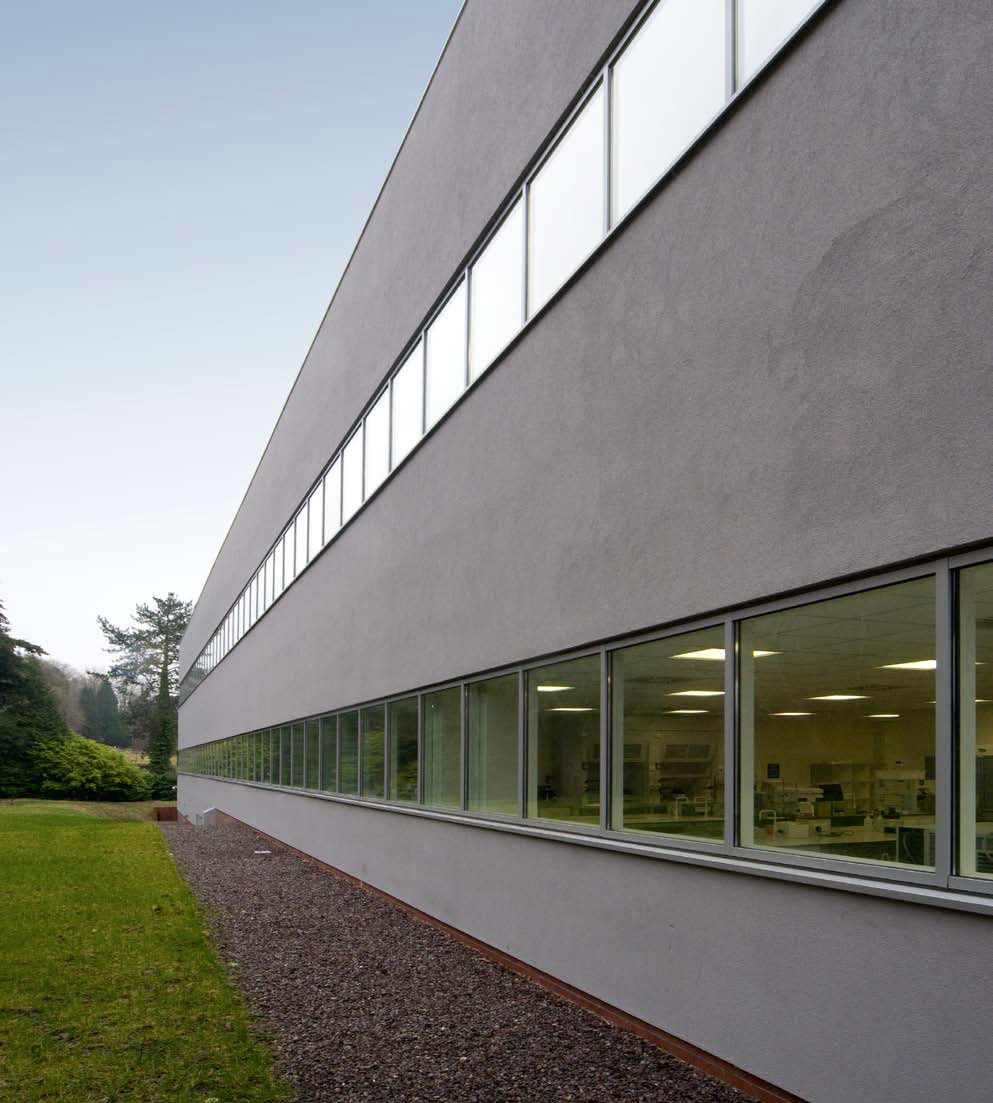

University of South Wales
350 meters cubed of waterproof concrete was supplied to ensure a dry basement at the new extension to the Health, Sports and Science (HESAS) facility at the University of South Wales, Glyntaff Campus, Pontypridd.
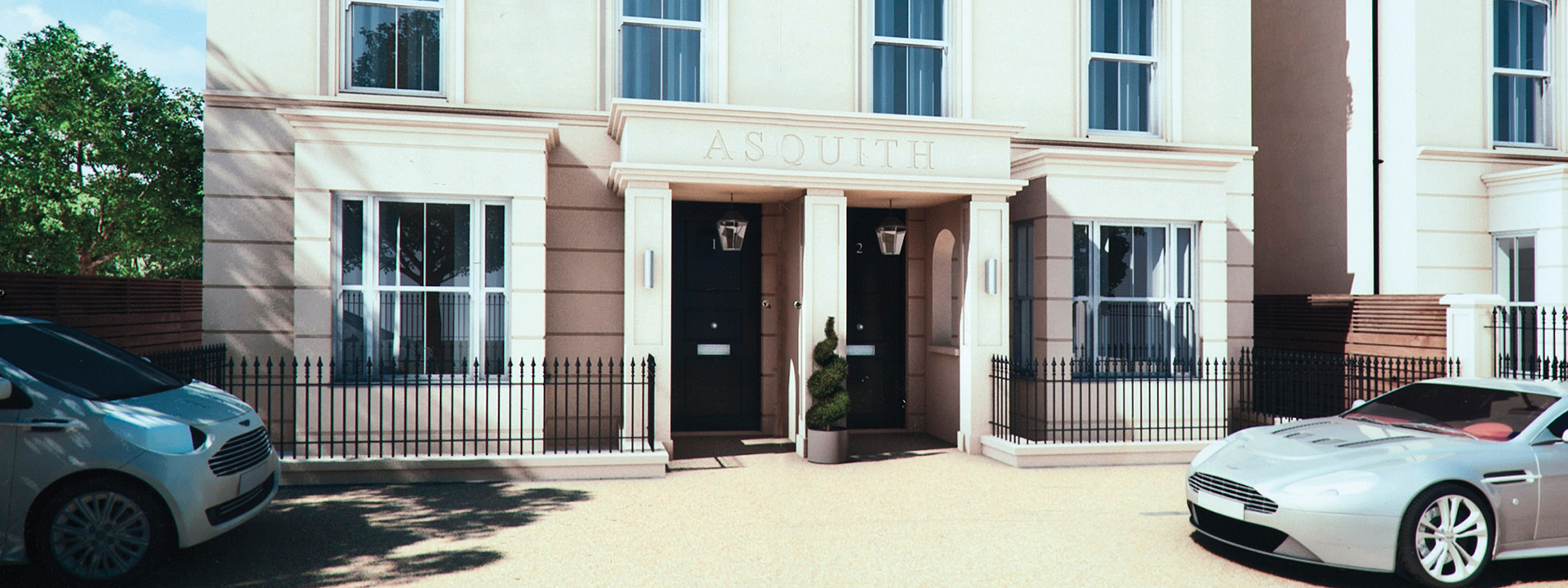

Asquith Spencer Park
We supplied 400 meters cubed of Waterproof Concrete for four luxury homes at Asquith Spencer Park, where CJ O’Shea selected a dual waterproofing system combining Sika products with Heidelberg Materials Waterproof Concrete to meet BS 8102:2009 Grade 3 requirements.
How to order waterproof concrete from Heidelberg Materials
To place an order for one of our waterproofing systems, please complete our request a quote form. If you need advice or support with a specification that involves underground waterproofing, contact our technical team. Or, for any other enquiries, use the contact form below to submit your message.