

To produce cement, limestone is heated to around 1,400°C and calcined into cement clinker. This chemical process is imperative in cement production , but one that accounts for two-thirds of direct CO2 emissions made in cement manufacturing. Even if 100% renewable energy is used for the manufacturing process, these emissions are unavoidable. As a result, cement production is a hard-to-abate industry, and one that requires carbon capture and storage (CCS) for decarbonisation.
What is CCS?
Carbon capture and storage is a process that:
- Captures CO2 emissions at source. In the case of cement production, we use proven amine technology to catch the emissions before they enter the atmosphere.
- Compresses the remaining CO2.
- Transports this CO2 to be injected into secure and existing geological formations deep underground, such as depleted oil and gas fields, or under the seabed for permanent storage.
In June 2025, we opened our CCS plant in Brevik, Norway, which is the first operational industrial scale CCS cement plant of its kind anywhere in the world. Brevik CCS captures approximately 400,000 tonnes of CO2 per year, which accounts for 50 per cent of CO2 emissions from the cement’s production. This CO2 is permanently stored 2.6 kilometers beneath the seabed.
Does CCS affect cement properties?
Using carbon capture and storage technology doesn’t alter the cement’s properties. It is still strong, durable, and fully compliant with BS EN 197-1:2011 (UK cement specifications), so mix designs do not need to change. CCS simply prevents the CO2 emissions produced during the manufacturing process from entering the atmosphere. As a result, the carbon footprint of the cement is dramatically lower than cement made without CCS technology.
To learn more, read our article: Environmental benefits of using carbon captured cement.
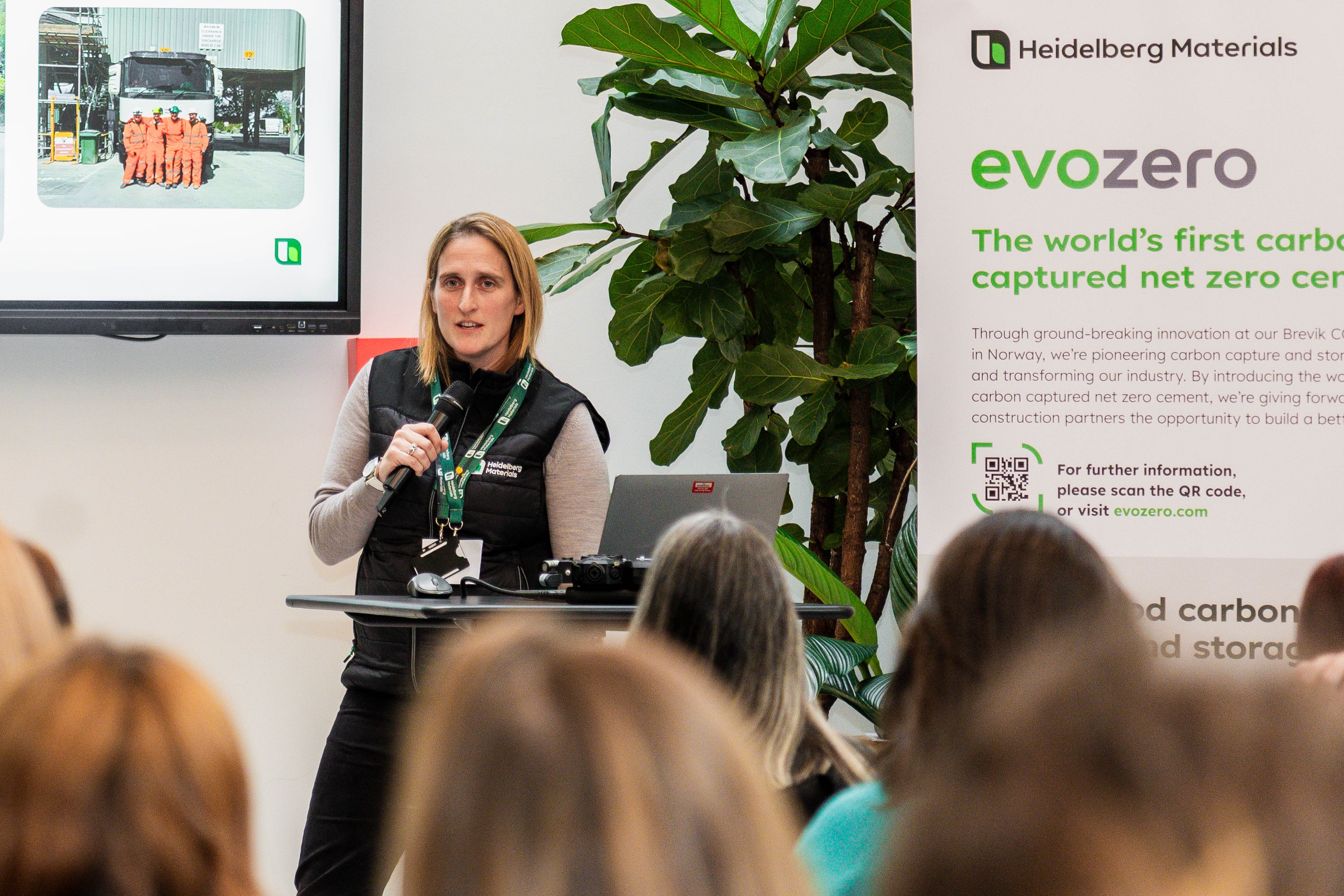

Meet the experts shaping the industry
From low carbon construction to emerging technologies, discover how our experts are advancing innovation and helping create a more sustainable future for the industry.
Applying CCS technology to cement production in the UK
With proof that large-scale CCS is feasible and safe, we’re now building the UK’s first CCS plant. When it’s fully operational, the plant (located in Padeswood, north Wales) will produce carbon captured evoZero cement at a much higher capacity than Brevik, enabling lower carbon construction across the UK.
With evoZero, we are offering the industry’s most innovative, globally unique product for our customers, enabling them to drive cutting-edge, environmentally conscious construction projects.
Dominik von Achten, chairman of the managing board
Advantages of CCS in cement production
Chemistry - namely the calcination process and the CO2 emissions it produces - can’t be changed. With the majority of CO2 emissions made in cement production coming from this process, deploying CCS technology for cement manufacture in the UK, and around the world, is of the utmost importance.
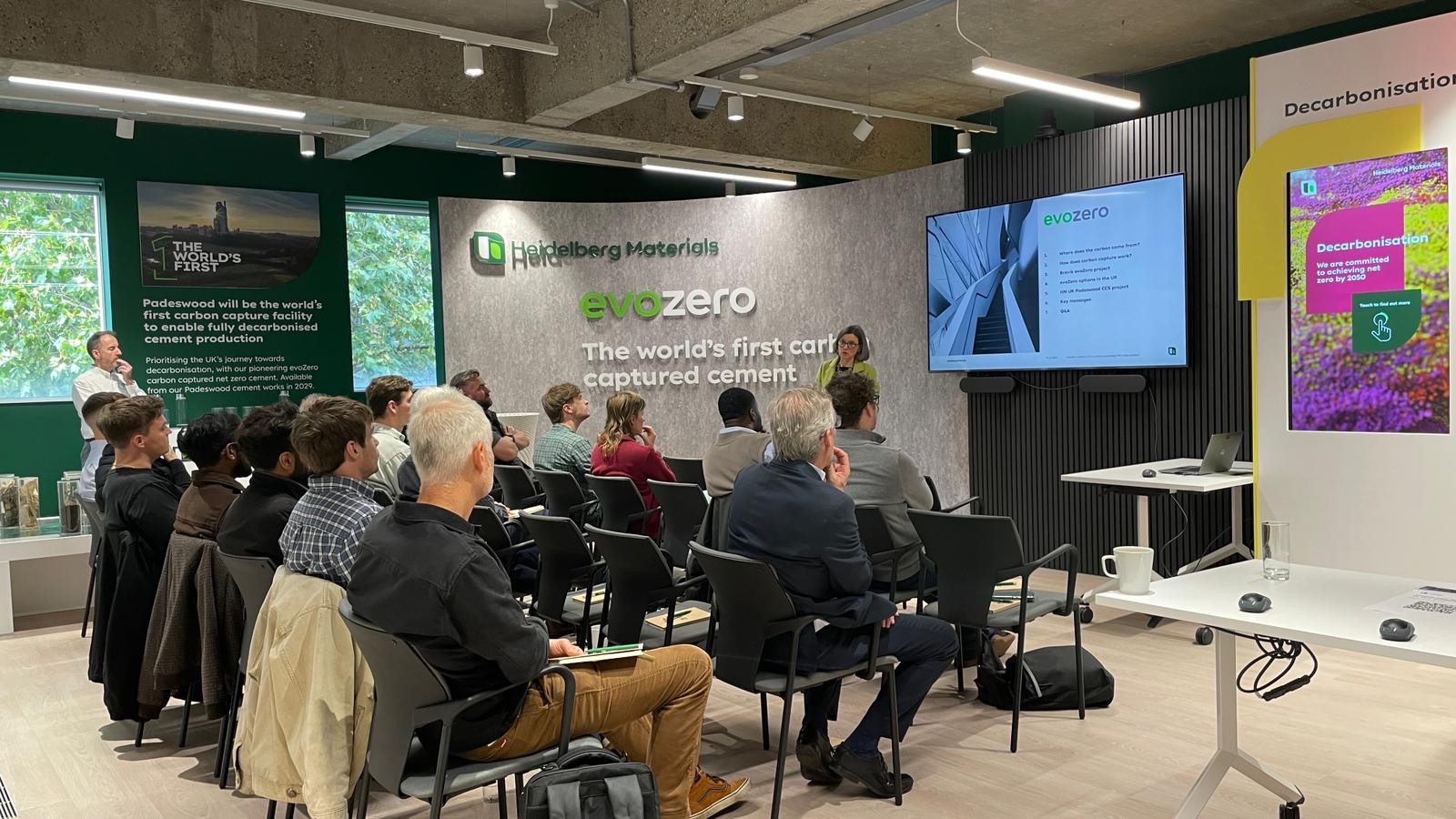

evoHub learning centre
Our flagship evoHub in Clerkenwell is a versatile space for meeting and educating our industry’s legislators, influencers, specifiers and customers on how decarbonisation can be achieved throughout the construction process.
At evoHub, we offer a variety of learning opportunities including CPD presentations, seminars and 'meet the expert' drop-in sessions.
How ready is CCS technology in the UK for cement production?
This said, the UK has long been crying out for a dedicated carbon capture and storage plant to apply the technology to cement production. Our Padeswood CCS plant will be the world’s first carbon capture facility which enables fully decarbonised cement production. We’re aiming for it to be operational by 2029 , with the plant able to capture and store around 800,000 tonnes of carbon annually. In a global first, evoZero carbon captured cement will be produced at the site, representing a groundbreaking move towards net zero for the construction industry.
How our CCS technology is used for HyNet
Our Padeswood CCS project is an integral part of HyNet , a major industrial decarbonisation project taking place in north-west England and north Wales. HyNet is integral to the UK meeting its net-zero greenhouse gas emissions targets by 2050, with the potential to reduce CO₂ emissions in the region by up to 10 million tonnes.

Carbon capture and storage at Padeswood
Padeswood CCS
Target: To be the world’s first full-scale near-zero cement works by 2029
Products: evoZero carbon-captured cement
Location: North Wales
Progress: Construction started in late 2025
Funding: With UK government support
Capacity: Up to 800,000 tonnes of CO2 captured annually (once fully operational)
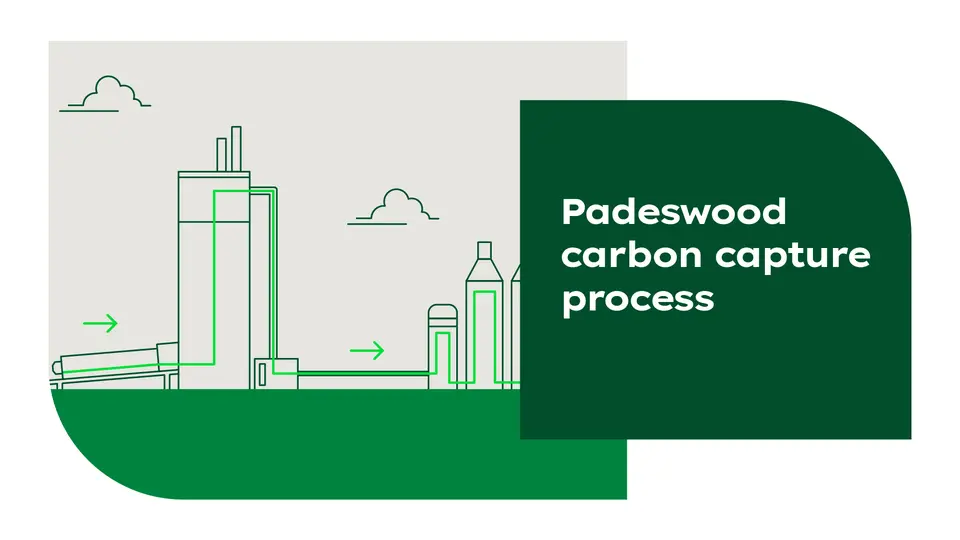
Watch the animation below to see how we will apply CCS technology to cement production at our Padeswood plant. You can also find more details about the process and the plant by downloading our brochure or by visiting the Padeswood CCS website .
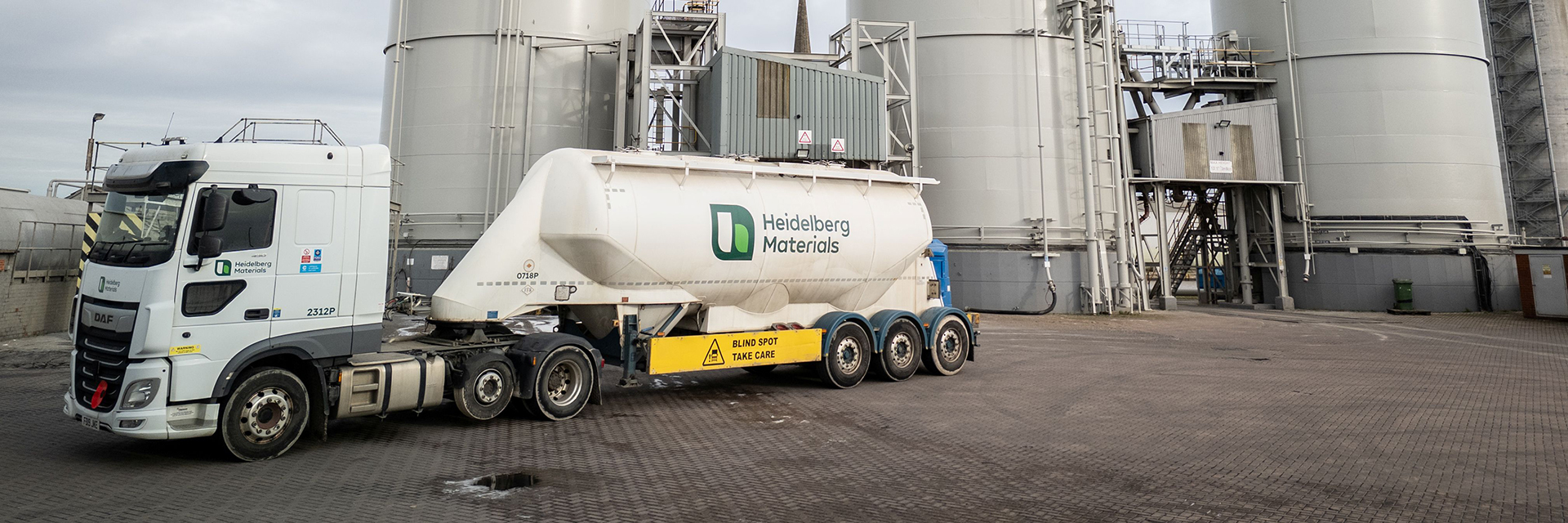

Demonstrating evoZero cement’s low carbon credentials through carbon accounting
Learn about the importance of carbon accounting when specifying evoZero (our carbon captured near-zero cement) with insight from Nina Cardinal, our Technical Strategy Director.
What can cement produced using CCS technology be used for?
evoZero carbon captured cement replaces CEM I in any construction application, as it is essentially the same product, just without the carbon footprint. By choosing concrete containing evoZero as opposed to CEM I, you can lower the carbon within your project, from major infrastructure projects, including roads, bridges, and tunnels to smaller projects such as paving slabs, paths or precast concrete.
How CCS lowers Scope 3 emissions
Using cement that has been produced using CCS technology and that can directly replace CEM I cement on a like-for-like basis means contractors, specifiers, engineers, and architects can hit ambitious sustainability goals and low-carbon building targets. CCS technology helps to lower Scope 3 emissions by reducing the embodied carbon of the purchased goods - in this case, cement either on its own, or within concrete. This is all without changing construction methods, missing project milestones, or incurring further product testing.
Carbon captured cement: Just one of many innovative sustainable building materials from Heidelberg Materials
We’re proud to be pioneering the UK’s first carbon captured cement, but we know that’s just the tip of the iceberg.
To meet our 2030 sustainability commitments, we’re developing a range of sustainable building materials that span cement, concrete, aggregates, and asphalt. To us, a sustainable building material is one made with recycled materials and/or with lower CO2 emissions during production, which maintains the same high performance and quality properties as the conventional materials.
Every one of these materials is designed to reduce environmental impacts while maintaining high quality standards over its entire life cycle.
Apply our CCS technology to your construction project
Turn your construction project into a sustainability flagship with evoZero, the world’s first carbon captured near-zero cement. Contact us via evozerouk@heidelbergmaterials.com or by completing the contact form below.
CCS in cement production FAQs
Is CSS safe?
Yes. CO2 is compressed and then transported to sites where it’s injected into existing geological formations deep underground and under the seabed for permanent storage. These formations are sealed for millions of years and monitored extensively to detect any associated risks or leaks.
Are the properties of cement made with CCS technology different to CEM I?
No, there is no change to the properties of evoZero carbon captured cement. It is still the same as CEM I but without the carbon footprint.
When will evoZero carbon captured cement be available in the UK?
Large-scale domestic production of evoZero carbon captured cement in the UK is planned for 2029. In the meantime, evoZero carbon captured cement is available now for UK projects via our CCS plant in Brevik, Norway. To place an order, please get in touch by emailing evozerouk@heidelbergmaterials.com or completing our contact form.
How is the carbon dioxide accountability managed?
Heidelberg Materials uses a blockchain-like system called the carbon bank. Every tonne of CO2 captured and stored at our Brevik plant is verified by a third party (DNV Business Assurance Germany GmbH) and accounted for. Customers are issued with an Environmental Attribute Certificate (EAC) to prevent double counting and ensure traceability. For more information, please view: evoZero assurance .
Is CCS different from carbon offsetting or credits?
Yes. CCS physically prevents emissions at source instead of offsetting through external projects (carbon offsetting or credits). It is permanent removal, not temporary storage or compensation.
Why not just use alternative cementitious materials instead of applying CCS technology to cement production?
While supplementary cementitious materials (SCMs), like GGBS, lower the amount of carbon in a cement, they can’t replace the clinker completely and therefore the associated carbon. During cement production, calcination emissions are unavoidable, so CCS is essential even alongside SCMs.
Does CCS affect cement performance or require new standards?
There is no impact on the performance or the quality of evoZero carbon captured near-zero cement. There are no changes to the manufacturing process, so there is no need for changes in design or compliance. evoZero meets all existing standards, including BS EN 197, and when it’s used in concrete, BS 8500 and BS EN 206.