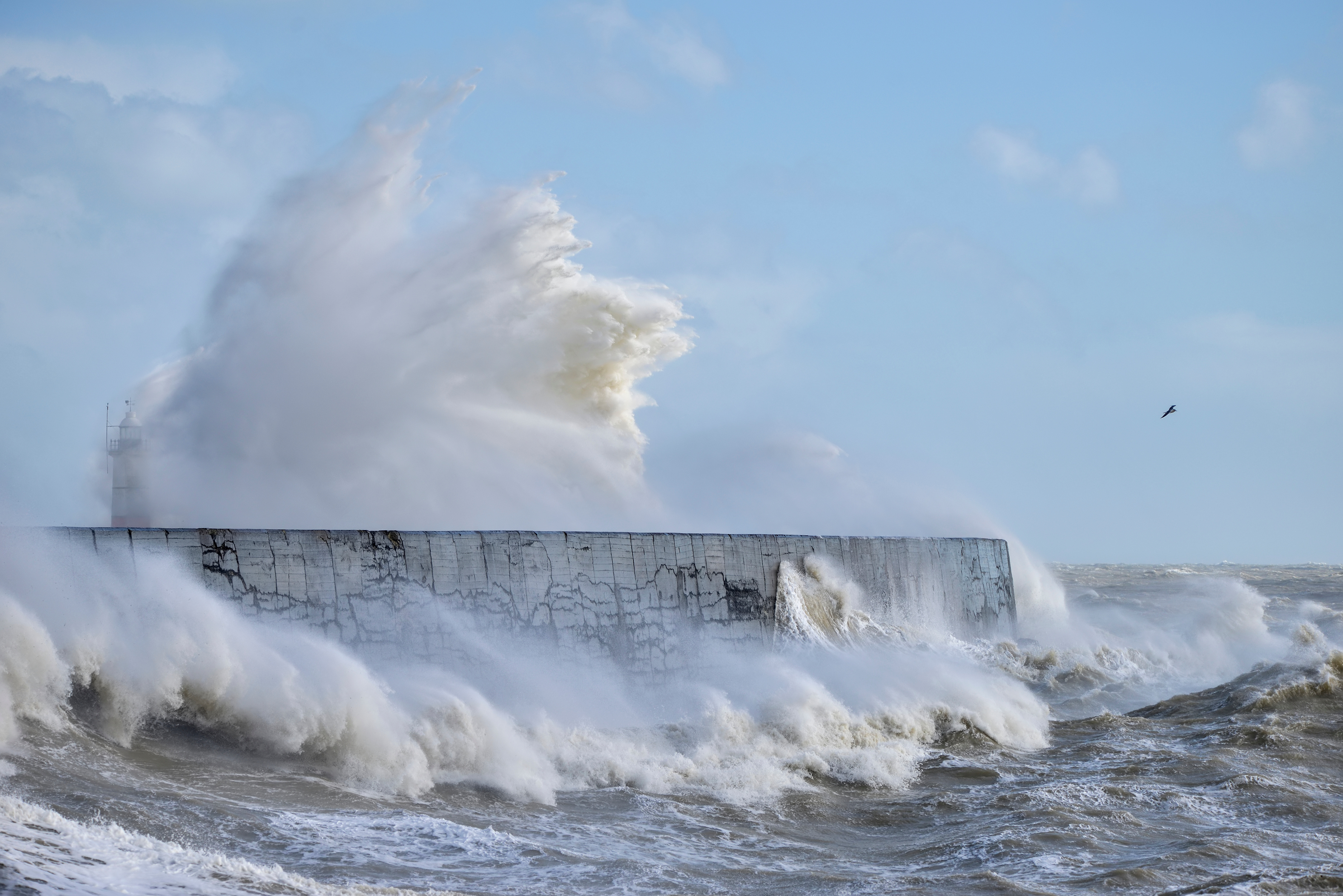
Designed to protect coastal areas and infrastructure from erosion, tidal surges, and extreme weather conditions.
Our aggregates for sea and flood defence applications are designed to protect coastal areas and infrastructure from erosion, tidal surges, and extreme weather conditions. The specialist materials are used in a variety of marine engineering, civil engineering, and environmental protection projects across the UK’s coast and water systems.
The range of sea defence aggregates includes Aggflow SuDS aggregates, rock armour, and gabion stones. We’ve engineered these materials to meet the performance, durability, and sustainability requirements of modern flood mitigation schemes.
With our nationwide supply network and technical expertise, we’re trusted by contractors, local authorities and infrastructure providers to deliver resilient and long-lasting flood defence solutions.
Browse our specialist coastal aggregates below and contact our team for advice on choosing the right material for your flood control project.
Aggregates for sea and flood defence
Learn about the different types of sea and coastal defence aggregates we supply to find the right material for your application.
Aggflow: Sustainable drainage aggregates
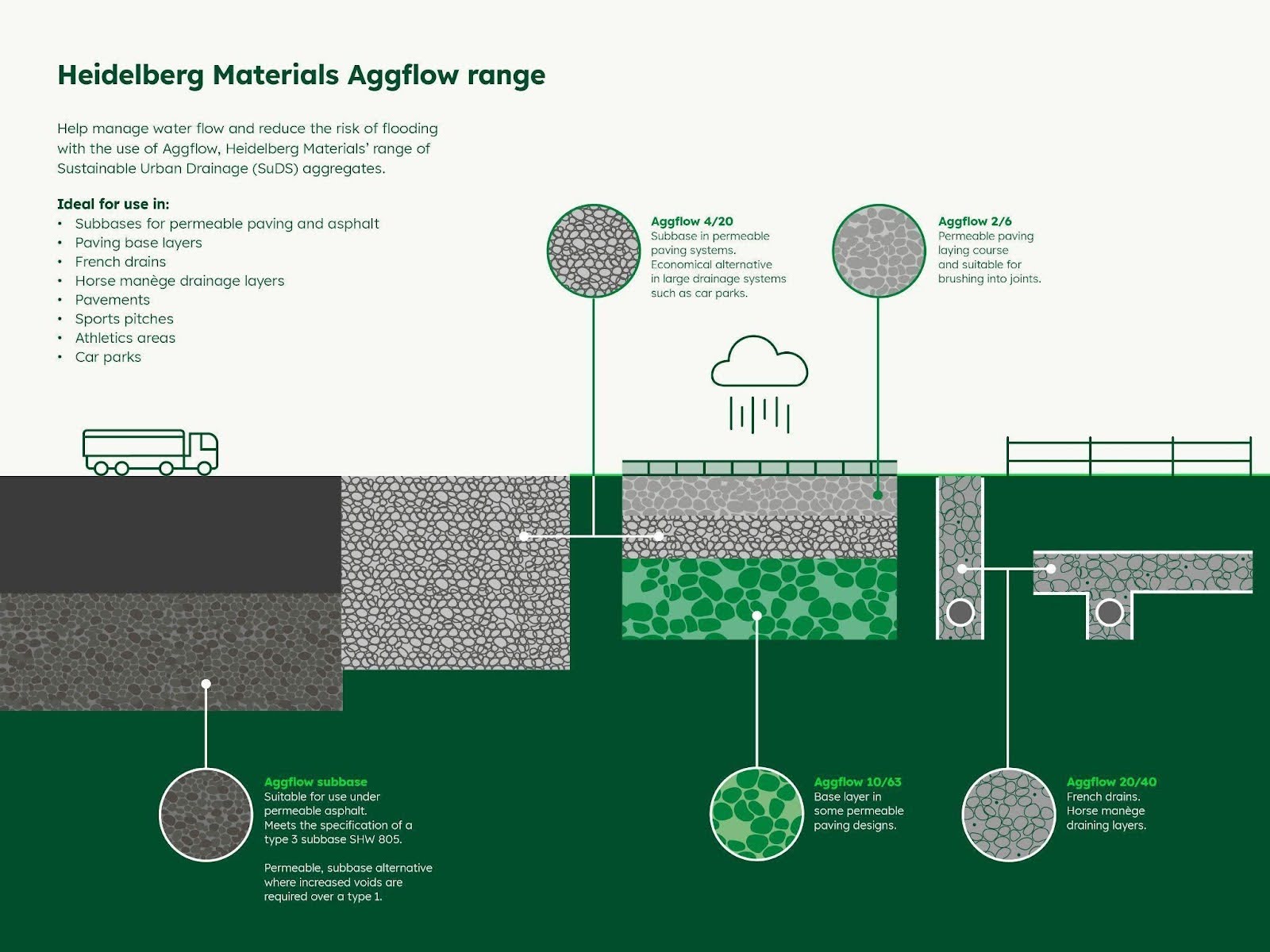
Aggflow is a Sustainable Urban Drainage System (SuDS) aggregate produced to consistent grading and quality standards. We’ve designed it to manage surface water runoff and reduce flood risk in both urban and rural environments.
The sustainable drainage aggregate comes in five forms and is ideal for use in:
Permeable paving systems
Infiltration trenches
Soakaways
Attenuation features
Aggflow by Heidelberg Materials supports effective water filtration, storage, and discharge, helping to prevent surface flooding and improve groundwater recharge. Our SuDS aggregate is a key component in sustainable drainage design and is widely used in housing developments, commercial sites and in the construction of sports and leisure facilities.
Rock armour for coastal and riverbank protection
Rock armour, also known as ‘riprap’, is used to protect coastlines, riverbanks, embankments and marine structures from erosion caused by wave action, tidal forces, and flowing water.
These large, durable stones are strategically placed to absorb and deflect the water impact, reducing the impact on vulnerable areas. We source our rock armour from high-quality quarried stone that’s been selected for its strength, density, and resistance to weathering.
Riprap from Heidelberg Materials is used extensively in sea walls, breakwaters, revetments and flood barriers. Please contact our team for details of the range of sizes and advantages of our rock armour for your project.
Gabion stones for flexible erosion control
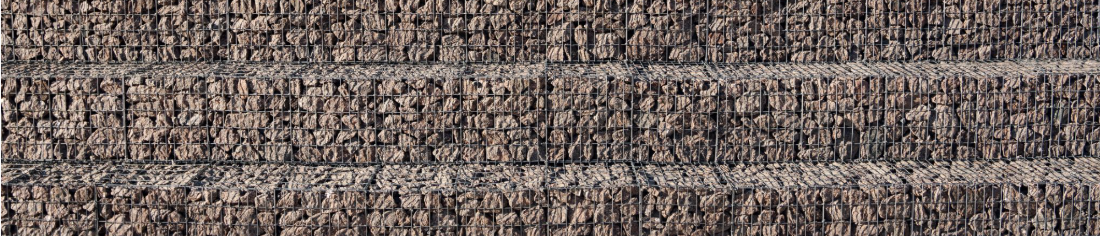
Gabion stones are used to fill wire mesh cages (gabions) for use in retaining walls, riverbank stabilisation, bridge abutments, and erosion control structures. They offer a flexible and permeable solution that adapts to ground movement while maintaining structural integrity.
We supply hardwearing, angular stones for gabion in standard sizes to ensure optimal interlocking and minimal voids. Gabion systems offer both functional and aesthetic benefits, and they’re widely used in civil engineering, landscaping, and flood defence schemes.
Recycled aggregates play an important role in decarbonising the construction industry.
Our ‘Benefits of recycled aggregates’ article has everything you need to know about recycled aggregates, including where they’re sourced from, how they’re made, suitable applications, and environmental advantages.
How do sea defence aggregates contribute to coastal protection?
By absorbing and deflecting wave energy, sea defence aggregates reduce the force that hits a shoreline. As a result, they prevent erosion and the risk of flooding. There are several different types of coastal defence systems, which work in unique ways to meet the needs of a particular coastline. These include:
Rock armour (also known as ‘riprap’): A barrier formed of large boulders and heavy rocks. They’re placed along vulnerable shorelines to absorb and deflect forces from waves. Water can still flow between or around the barrier, but reaches the coastline with far less impact.
Gabions: Steel mesh cages filled with rocks and aggregates. Like rock armour, they absorb energy, while also acting as retaining walls to stabilise the area.
Visit our flood and coastal erosion protection page for more information on the flood defence solutions we offer for critical infrastructure projects across the UK.
What materials are commonly used in coastal defence?
Numerous materials are used in coastal defence systems, including:
Stones for gabion baskets (wire cages filled with small rocks and boulders)
The right aggregate for a coastal defence project depends on the demands of the application. Please speak with our technical team for support and advice on selecting the best material.
What are the benefits of using aggregates for drainage in flood-prone areas?
Permeable aggregates are typically used in flood defence systems due to their ability to allow water to soak into the ground slowly. This reflects the natural water recharge process, helping to restore the natural water cycle.
SuDS (Sustainable Drainage Systems) use these permeable aggregates to reduce the flow of water into the water and waste management network (for example, sewers). They help to reduce the:
Risk of surface water flooding
Pressure on sewerage systems
Amount of pollution in water from runoff
Heidelberg Materials has developed Aggflow, a specialist SuDS aggregate, to reduce flood risk, manage surface water runoff, and improve groundwater recharge. Aggflow can be found in a variety of applications, including infiltration trenches, soakaways, and permeable paving systems.
Sustainable urban drainage systems also benefit from Tuffdrain®, an asphalt material we’ve developed to provide excellent drainage and durability, and fast installation. Use our Tuffdrain webpage for more information, and to find out more about Aggflow, sustainable drainage design, or materials for flood prevention, please talk to our technical team.
How do you choose the right aggregate for coastal defence projects?
When selecting an appropriate aggregate for coastal defence, it is essential to understand the specific needs of the application. For instance, riprap is more suited to erosion control than SuDS aggregates, which work to improve and manage drainage.
You also need to consider the properties of the aggregate - and if these meet the needs of your project. Think about:
Size, shape, and structure
Durability and strength
Chemical composition - particularly important for compliance with environmental impact and sustainability commitments
Alongside this, make sure you understand the technical specifications of the aggregate. For instance, grading (to meet specific sizes for proper compaction and load distribution) and standards (all relevant coastal construction and engineering standards).
Our team of aggregate specialists are on hand to provide the support and guidance you need to ensure you select the most appropriate aggregate for your application.
Contact us
How can aggregates be recycled for use in flood defences?
Different recycled aggregates are suited to different applications within flood defence systems. These include:
Bulk fill materials for flood barrier and other infrastructure foundations
Gabion baskets
River and coastal bank protection
Drainage systems
Choosing recycled aggregates over virgin aggregates has numerous environmental and economic benefits. From reducing the amount of waste sent to landfill and increasing the cost-effectiveness of a project, to helping conserve natural resources, recycled aggregates are a more sustainable alternative to virgin materials.
A sustainable urban drainage system (SuDS) is a surface water management method. It manages water at or near where it falls, slowing, storing, and cleaning rainwater runoff before releasing it.
A SuDS helps to:
Improve water quality
Reduce flood risk
Better the environment for wildlife (by providing more habitats) and people (by enhancing the aesthetic appeal of urban areas)
Alongside permeable aggregates, concrete and asphalt are two materials that can be used with a SuDS. When engineered into permeable materials, they can mimic natural ground by managing rainwater at the source. Heidelberg Materials has developed specialist concrete and asphalt products (no-fines concrete and Tuffdrain) to form part of sustainable urban drainage systems.