

Supplementary cementitious materials are essential in reducing the carbon footprint of cement and concrete. By replacing clinker (the most carbon-intensive component of concrete), SCMs help to lower embodied CO₂ and maintain, or enhance, performance.
Unlocking the future of low carbon concrete
Heidelberg Materials UK already offers the most commonly used cement substitute, GGBS (ground granulated blast furnace slag), as part of our lower carbon product range: evoBuild. We’re actively trialling a wider range of other supplementary cementitious materials to support the UK construction industry in reaching its 2050 net zero targets. All of these supplementary cementitious materials will offer distinct sustainability benefits, technical characteristics, and carbon reduction properties.

Sustainability commitments
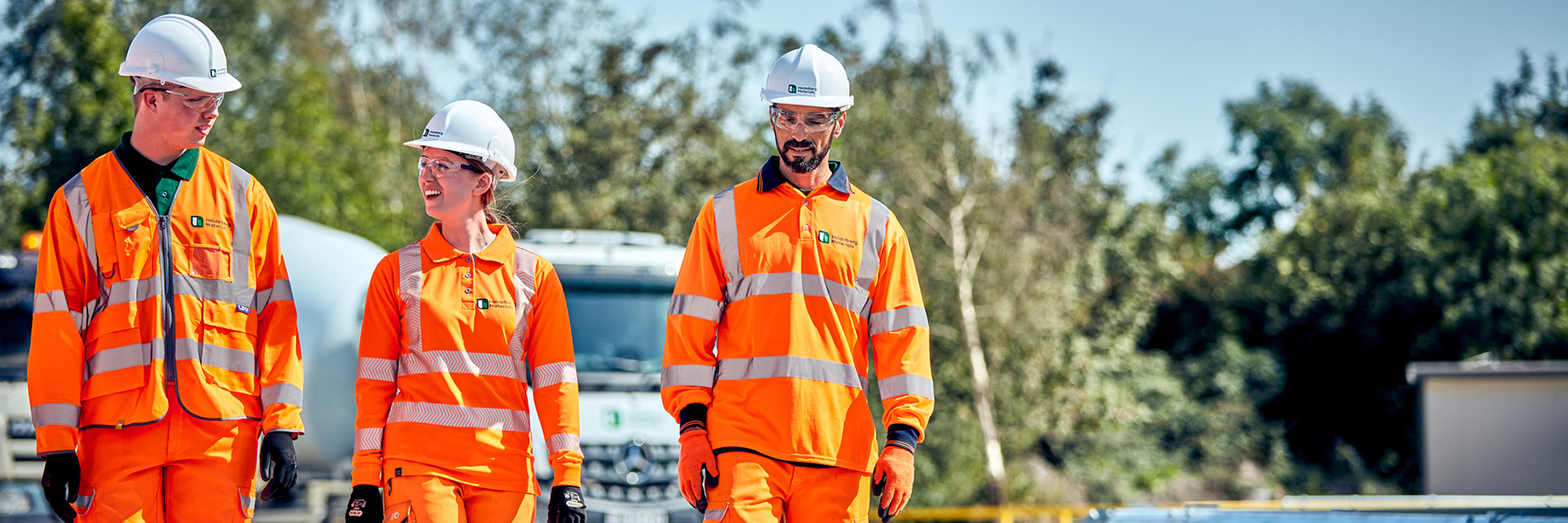
As part of a global company, we have developed ambitious targets for 2030 and beyond. These reflect the Heidelberg Materials Group sustainability strategy, and also include key drivers from the UK construction industry.
What are supplementary cementitious materials?
SCMs are materials that exhibit cementitious properties when combined with CEM I. They’re also known as ‘secondary cementitious materials’, because they are derived from industrial by-products, natural minerals, or recycled materials.
SCMs replace cement clinker, which is derived from limestone. Clinker production is the main source of CO2 emissions in concrete and cement . A number of alternative materials are in now use and being developed to directly reduce the amount of clinker used in concrete production - and lower CO2 emissions in the process.
Types of supplementary cementitious materials
SCMs can be classed as either pozzolanic or hydraulic:
- Pozzolanic materials react with calcium hydroxide to form more cementitious compounds. Calcium hydroxide is a byproduct of cement hydration, which is the fundamental chemical reaction between cement particles and water that causes the mix to set.
- Hydraulic materials react directly with water to form cementitious compounds. Whilst GGBS falls into this category, its performance is dependent upon the addition of an alkaline material such as CEM I.
Advantages of using SCMs
Replacing a portion of clinker with an SCM can offer several key benefits depending on the concrete, as well as the sustainability of the overall construction project.
- Improves durability and workability (and pumpability of fresh concrete)
- Increases long-term strength
- Promotes the recycling of industrial waste and use of industrial byproducts to reduce the environmental impact of producing cement and/or concrete and avoiding the materials ending up in landfill
Article: Delivering carbon reduction in concrete
The world needs smart, sustainable and resilient infrastructure. But challenges like climate change and limited resources mean that the production and use of heavy building materials needs to evolve.
Article: What are the environmental benefits of SCMs?
For the construction industry to decarbonise, the development and adoption of sustainable building materials is key. SCMs are at the core of sustainable cement production and in turn, more sustainable concrete.
Our article explores how SCMs lower the embodied carbon dioxide emissions of cement and help to reduce the carbon footprint of the end concrete.

SCMs for sustainable concrete
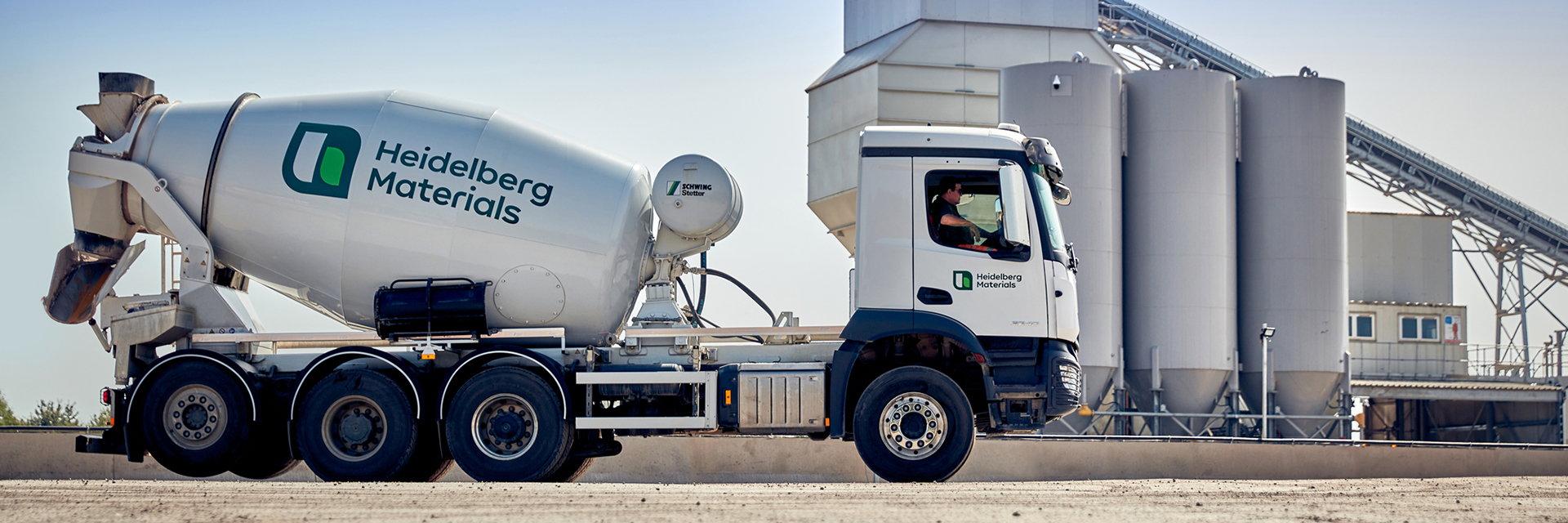
Find details on the range of SCMs we offer to produce more sustainable concrete below. For information on the materials we’re trialling to further lower the embodied CO₂ emissions of concrete, please contact us.
Cement alternatives in action
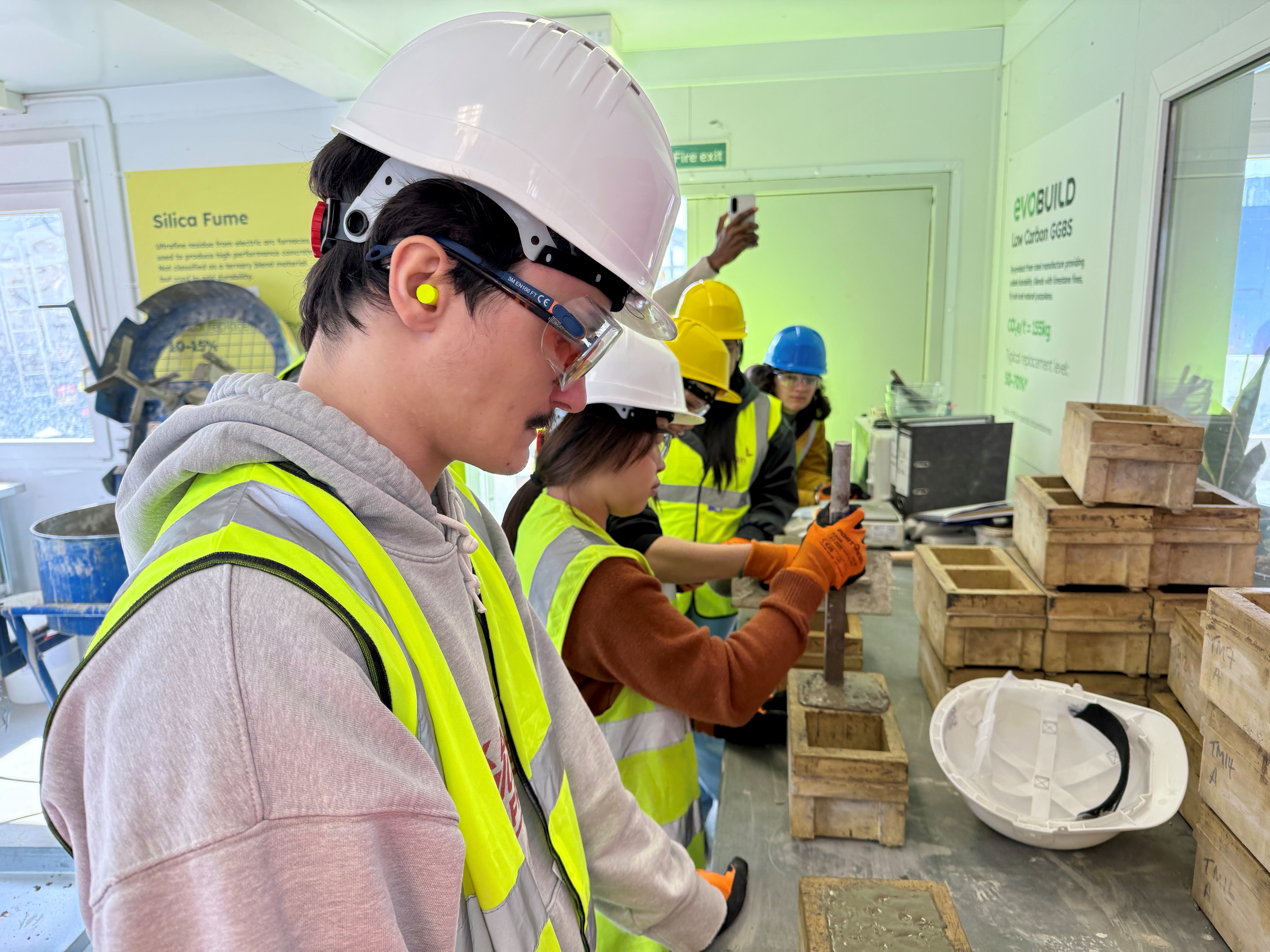
evoHub Greenwich is our practical learning environment where visitors get a hands-on approach to building their sustainability knowledge.
Through product demonstrations, trials, and other events, it’s where you’ll gain a better understanding of how Heidelberg Materials is pioneering the decarbonisation of the construction industry.
GGBS
Ground granulated blast furnace slag is one of the most popular and effective SCMs. It’s a byproduct of iron and steel making, and is produced by rapidly cooling molten slag and then grinding it into a fine powder.


Pioneering lower carbon cement and cement alternatives
Discover how Dr. Nina Cardinal is helping drive the adoption of innovative products like evoZero carbon-captured cement and cement alternatives, delivering practical solutions that reduce clinker content and accelerate progress toward net-zero construction.
Applications
GGBS is typically used in major construction projects, such as bridges and sea defences, but can be used almost anywhere concrete is needed.
Compliance
Our GGBS complies with EN 15167 and EN 197 and is permitted for use in accordance with BS8500 as a mixer combination in concrete.
Benefits
- Enhanced durability
- Improved workability
- Reduced the heat of hydration
- Lighter in colour to fulfil different aesthetic needs
Sustainability
GGBS has been used successfully as a cement substitute in UK concrete for decades.
- Carbon impact: GGBS has a Global Warming Potential (GWP) of approximately 155kg CO₂e per tonne. CEM I (Portland cement) has a GWP of around 804kg CO₂e per tonne.
- Replacement levels: It typically replaces around 50% of clinker, but can replace up to 70% or more in specialist applications.
Our flagship GGBS product, evoBuild low carbon GGBS, is the best option for low carbon concrete production in the UK, with reliable, safe, and secure supply guaranteed.
Calcined clay
Calcined clay is a type of clay that has been heated to high temperatures to activate its cementitious properties.
Applications
Calcined clay can be used in concrete mixes for general construction projects. Its properties enable it to reduce the permeability of concrete and improve resistance to aggressive agents, making it a popular choice for applications in aggressive environments.
Sustainability
Unlike clinker, calcined clay does not release CO₂ during chemical transformation, making it a lower-carbon alternative. Carbon emissions are limited to the energy used for drying, calcining, and grinding the clay.
Benefits
- Contributes to strength development in concrete
- Enhances the strength of concrete in the long-term
Availability
Calcined clay availability in the UK is currently limited while supply chains are being developed. It's anticipated to become a common product in the future.
Real results for real impact
Heidelberg Materials UK is actively involved in research and partnerships to assess UK clay sources and trial calcined clay mixes.
We have successfully supplied C32/40 and C40/50 concrete mixes with 30 per cent calcined clay to the new London Museum in Smithfield, as well as another project with BAM near Liverpool Street. Both projects reported excellent compaction, no delays in striking, and great overall performance.
evoHub
At our evoHub Greenwich ready-mixed concrete plant in London, we offer calcined clay as part of our evolving portfolio of cement substitutes. Lab trials have shown that up to 30% replacement of CEM I with calcined clay achieves strength equivalency with GGBS at 28 days. Beyond 30%, relative strength declines more sharply, helping guide optimal usage levels. As demand grows, we are preparing to expand supply for further trials and development.
Our Greenwich lab is part of evoHub, alongside our flagship location in Clerkenwell. These sites support the education of our industry's legislators, specifiers and customers, focusing on how decarbonisation can be achieved within construction.

Lower carbon concrete CPDs
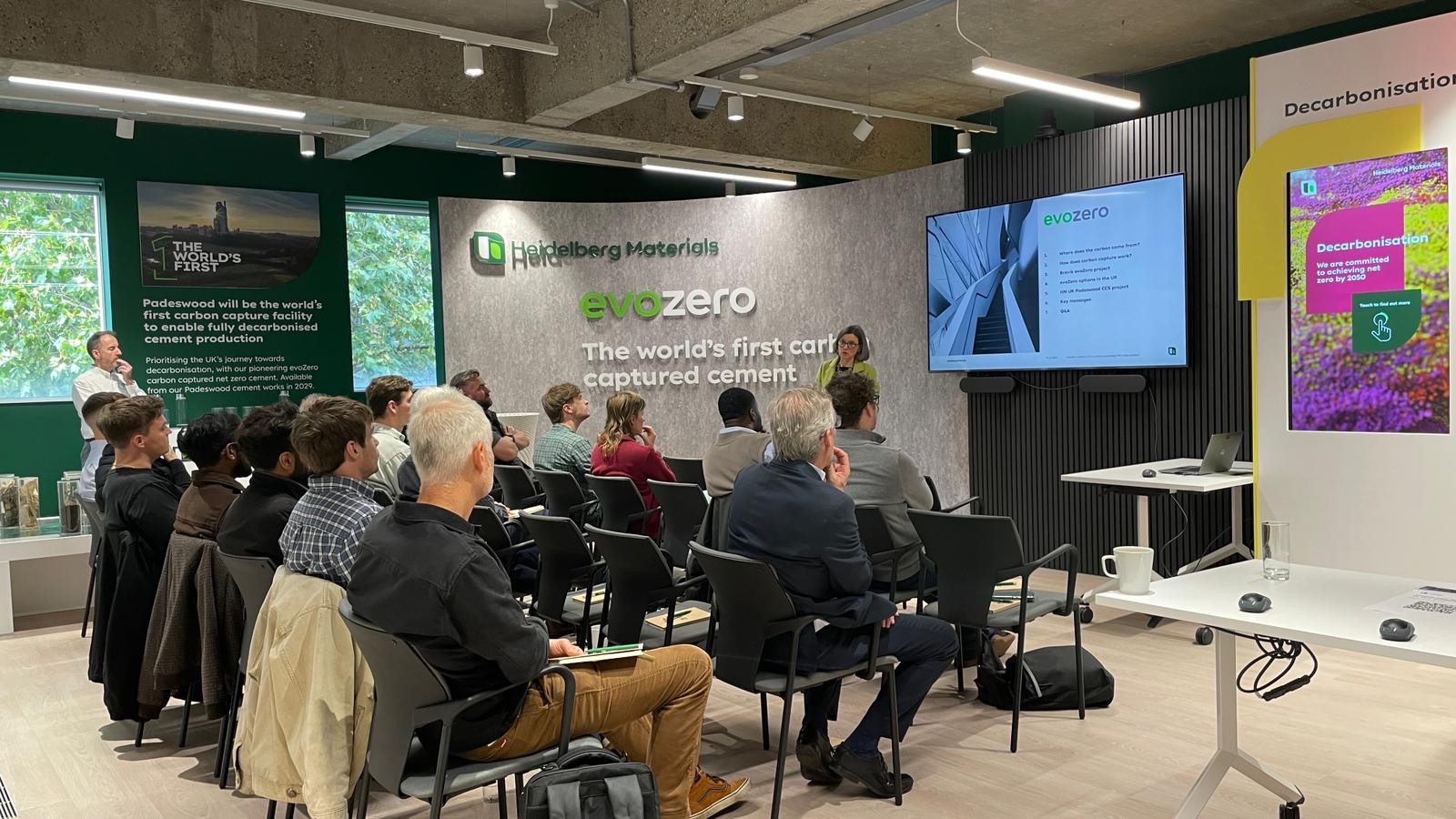
At evoHub, we offer a variety of CPD opportunities, from presentations and seminars to Meet the Expert drop-in sessions.
Limestone fines
Limestone fines are finely ground calcium carbonate, widely used as a filler material in the production of EasyFlow self-compacting concrete and flowing screed, like EasyFlow Screed C. When used in small quantities or as part of a ternary blend, they offer modest carbon reductions. Their inclusion in BS EN 197-5 and BS 8500 makes them a reliable option for mainstream applications.
Natural pozzolans
These SCMs are the byproducts of volcanic ash or sedimentary materials. When they react with calcium hydroxide from cement hydration, they form cementitious compounds.
Natural pozzolans are one of the longest-standing SCMs, with usage dating back to the Roman era. They offer long-term durability and resistance to chemical attacks. While not widely available in the UK, there are deposits in Iceland and Greece.
Fly ash
Fly ash is a fine powder and a byproduct of coal combustion in power stations. Traditionally, it has been used for its pozzolanic properties, which improve the durability and long-term strength of the cement mix for concrete.
Fly ash can substitute between 20% and 40% of CEM I. However, fresh fly ash supplies have become limited in the UK due to coal-fired power generation being phased out.
There are substantial existing stockpiles of waste ash that have not historically been used. Projects are ongoing to reclaim and repurpose this "beneficiated" material with a view to achieve a BS EN compliant SCM.
Recycled concrete paste (RCP)
RCP is a fine powder obtained from crushed, recycled concrete. It contains residual cementitious material and fine aggregates, which make it a prime material for cement mixes. Through carbonation, the reactivity of recycled concrete paste can be enhanced, allowing it to contribute to strength development and CO₂ capture.
Our recycled concrete paste comprises 60% cement and 40% very fine sand and aggregate. In a UK trial, 15 tonnes of our RCP was used to capture 1.5 tonnes of CO2 in just 20 minutes in a trial. At our state-of-the-art facility in Poland, a high-quality separation and sorting process was introduced at industrial scale to fully recycle demolition concrete. Historic stocks of waste material are undergoing processing to allow their use in concrete with anticipated commercial availability in the coming years.
[Our RCP is] a highly reactive material that can be used as a cement substitute, and one that can be used to create very strong concrete with rapid strength gain – much faster than fly ash, for example.
Dr Jan Skocek, R&D Programme Manager at Heidelberg Materials
Partnering for progress
SCMs are reshaping the future of construction. Whether you’re designing for durability, sustainability, or circularity, our technical team is here to help you find the right low carbon concrete solution for your project. Get in touch with them by emailing: concrete.technical@heidelbergmaterials.com. For any other enquiry, please complete the contact form below.
Contact us
Supplementary cementitious materials FAQs
What are some alternative cementitious materials to traditional CEM I?
The clinker used to produce CEM I is highly carbon intensive, with clinker production the main source of CO2 emissions in concrete and cement. Alternative cementitious materials have been developed to reduce the amount of clinker used in concrete production, and therefore reduce the associated carbon footprint.
These materials are industrial by-products, recycled materials, or natural minerals. They include:
- GGBS (ground granulated blast furnace slag)
- Calcined clay
- Limestone fines
- Natural pozzolans
- Fly ash
- Recycled concrete paste (RCP)
How do SCMs affect the strength of concrete?
In the long-term, SCMs can refine the microstructure of the concrete to help enhance the strength and durability of concrete. Over time, concrete made with SCMs can see continued strength growth, overtaking the strength of concrete made with only CEM I. Specialised mixes or additives can be used to speed up early strength gain, too.
How does the use of alternative cementitious materials impact the durability of concrete structures?
Concrete made with alternative cementitious materials, such as GGBS, typically has a denser microstructure. This helps to reduce the permeability of the concrete and increase its resistance to chemical attack, enhancing its overall durability.
When alternative cementitious materials react with calcium hydroxide (a byproduct of cement hydration), they form more Calcium-Silicate-Hydrate, which is the essential binder in concrete. This reaction has hardening properties and provides the concrete with long-term strength and durability.