

Independently verified EPDs for concrete
Environmental Product Declarations (EPDs) provide clear, verified information about the environmental impact of our concrete. They help specifiers, contractors and clients make informed concrete procurement decisions, and support compliance with sustainability standards, planning requirements, and whole life carbon assessments.
At Heidelberg Materials UK, we publish independently verified EPDs to give you confidence in the carbon data behind our ready-mixed concrete products.
evoHub
evoHub Greenwich is our practical learning environment where visitors get a hands-on approach to building their sustainability knowledge.
Through product demonstrations, trials, and other events, it’s where you’ll gain a better understanding of how Heidelberg Materials is pioneering the decarbonisation of the construction industry.
What is an EPD?
An EPD is a standardised document that reports the environmental impact of a product across its full life cycle, including end-of-life. Our concrete EPDs include:
- Raw material supply
- Transport to the concrete plant
- Manufacturing at the concrete plant
- Transport to the work site
- Installation
- Use
- End of life phases
How concrete EPDs are created
Every concrete EPD from Heidelberg Materials UK is based on Life Cycle Assessment (LCA) methodology and has been developed in line with recognised international standards such as EN 15804 and ISO 14025 . This standardisation ensures environmental data is transparent, consistent, and comparable across different products and suppliers.
Why EPDs matter for sustainable construction
For concrete users, EPDs play a critical role in supporting low carbon specification, whole‑life carbon assessment, and compliance with sustainability frameworks such as BREEAM and LEED. They provide a trusted source of environmental data that can be used with confidence in regulated construction projects.
Heidelberg Materials UK is committed to the sustainable and innovative development of low carbon concrete and wider low carbon building materials. By publishing our EPDs, we’re increasing the transparency of our products to help the construction sector make the most informed decisions.

Lower carbon concrete CPDs
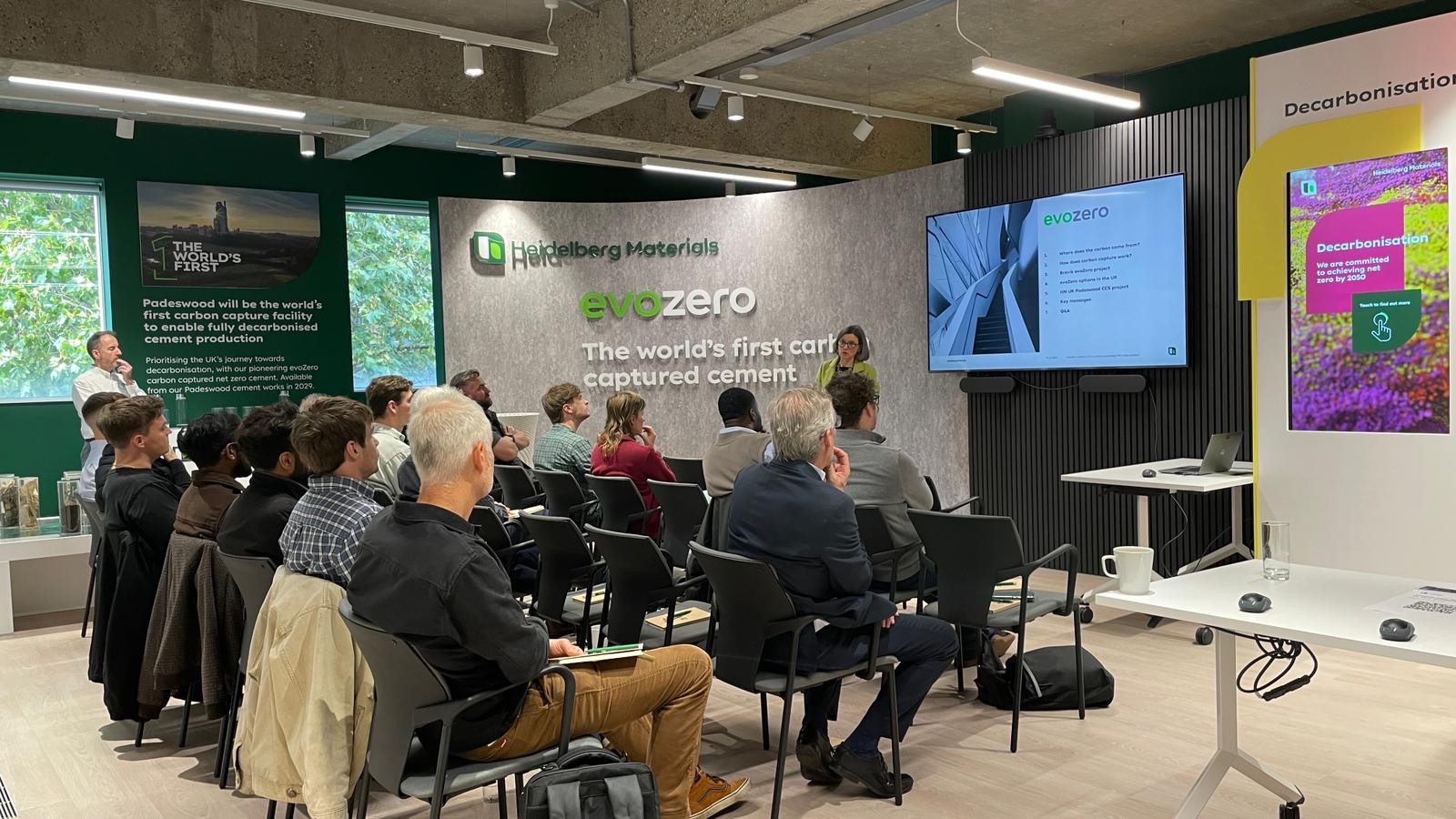
At evoHub, we offer a variety of CPD opportunities, from presentations and seminars to Meet the Expert drop-in sessions.

Sustainable low carbon concrete solutions
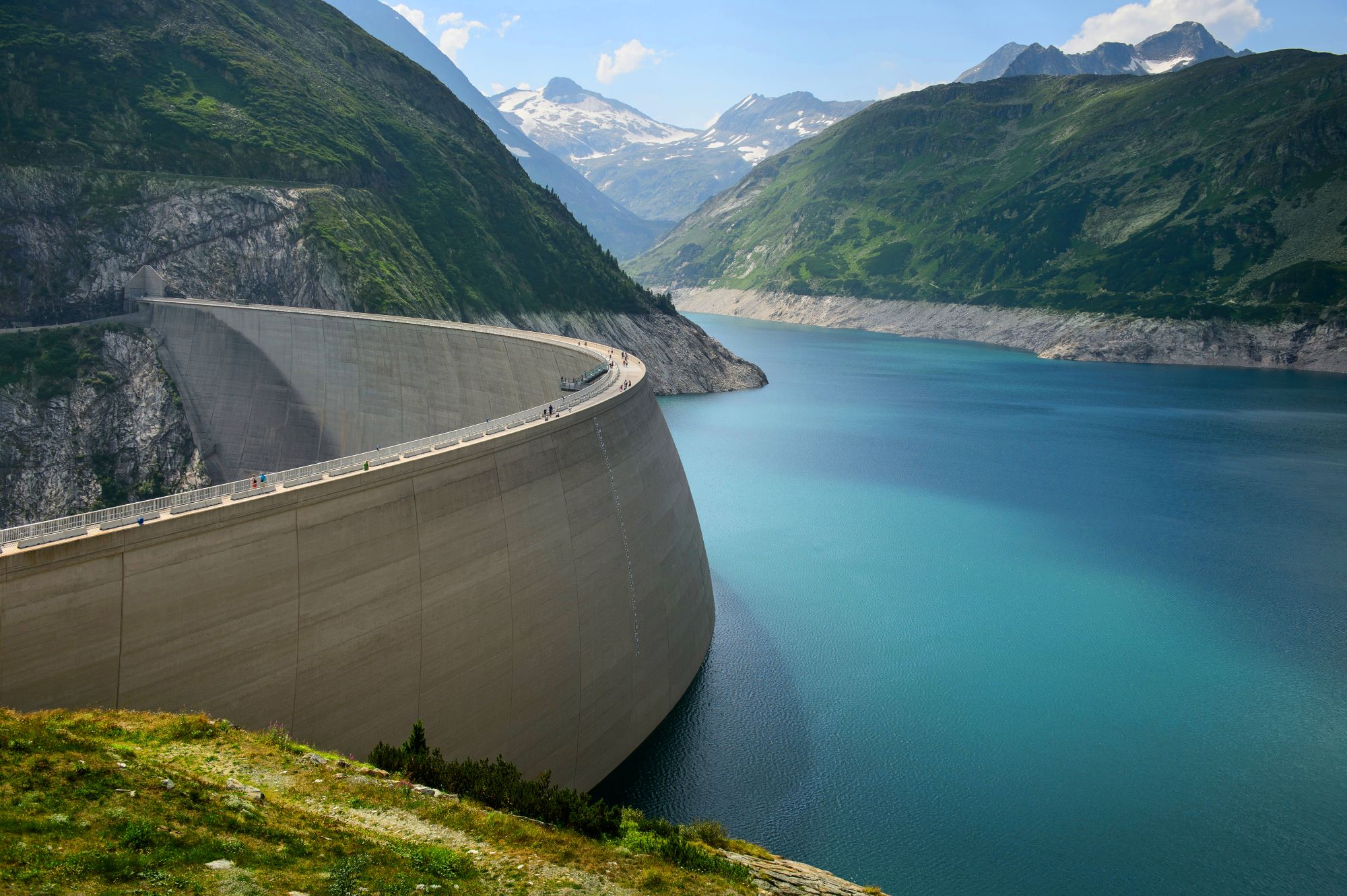
Heidelberg Materials concrete can incorporate a proportion of evoBuild low carbon GGBS, (Ground Granulated Blast furnace Slag), a sustainable cement replacement that significantly reduces CO₂ emissions compared to traditional CEM I.
How EPDs support low carbon concrete specifications
Concrete Environmental Product Declarations allow designers and specifiers to:
- Compare concrete mixes on a like‑for‑like basis
- Identify lower‑carbon options without compromising performance
They support early‑stage design decisions, help you to identify where carbon reduction has the greatest impact, and provide the verified data needed to demonstrate compliance with client and regulatory requirements.
Article: Delivering carbon reduction in concrete
The world needs smart, sustainable and resilient infrastructure. But challenges like climate change and limited resources mean that the production and use of heavy building materials needs to evolve.
How we certify our concrete Environmental Product Declarations
We follow a robust and transparent process to develop and certify our concrete EPDs.
Each declaration is underpinned by detailed life cycle assessments (LCAs) using production data from our UK operations. This ensures the environmental impacts that are reported accurately reflect how our ready-mixed concrete is produced.
EN 15804 compliance
All of our EPDs are independently reviewed and published by EPD Global , powered by EPD Norway, an approved third-party programme operator. Such independent verification confirms that calculations, assumptions and results meet the requirements of EN 15804.
Once verified, our EPDs are made available to support specification, tendering, and sustainability reporting. Taking this approach ensures our EPDs are credible, comparable, and suitable for use across a wide range of construction projects.
Global warming potential
Global warming potential (GWP) is the primary carbon metric in EPDs. It shows the total climate impact of the product over defined life cycle stages. EPDs report GWP in modules such as:
- A1–A3: Product stage (most commonly used for specification)
- A4–A5: Transport and construction
- B: Use phase
- C: End‑of‑life
Additional environmental indicators
Alongside carbon, EPDs also report:
- Resource use (energy and water)
- Waste generation
- Acidification and eutrophication potential
This wider data set supports balanced sustainability decisions beyond carbon alone.
Are EPDs the same as carbon footprint data?
Environmental Product Declarations are not the same as standalone carbon footprint data. While carbon footprint figures focus primarily on CO₂ emissions, EPDs provide a broader environmental profile and are independently verified. They follow strict calculation rules and reporting standards, which makes them suitable for use in planning, procurement, and sustainability certification schemes.
EPDs
- Include carbon plus other environmental indicators
- Are independently verified
- Follow standardised calculation rules
Carbon footprint data
- Focuses on CO₂ emissions
Our carbon footprint data for concrete is mix specific and included with every concrete quote.
Concrete testing services
Heidelberg Materials UK concrete’s national laboratory is fully equipped to provide a range of testing services in accordance with British and European Standards.
We offer on-site sampling and testing to help demonstrate compliance with your concrete specification requirements, as well as a collection and testing service for site manufactured samples.
Concrete knowledge hub
Explore technical information about ready-mixed concrete and find answers to common questions to ensure your project’s success.
Supporting your sustainability goals
Our ready-mixed concrete EPDs support your sustainability objectives by providing trusted, verified environmental data that integrates seamlessly into modern construction workflows.
You’ll find all of our concrete EPDs in our document download centre. For technical support, please contact our technical team who can:
- Support you with your next low carbon project
- Advise you on the right concrete mix for your application
- Help you with carbon reporting
For other requests, please get in touch using the form below.


Sustainability commitments
As part of a global company, we have developed ambitious targets for 2030 and beyond. These reflect the Heidelberg Materials Group sustainability strategy, and also include key drivers from the UK construction industry.
Contact us
Concrete EPD FAQs
Where can I download concrete EPDs?
Search for and download concrete EPDs from Heidelberg Materials UK using our document download centre.
What information is included in a concrete EPD?
EPDs provide a broad environmental profile and include:
- CO₂ emissions
- Resource use (energy and water)
- Waste generation
- Acidification and eutrophication potential
What is the difference between an EPD and an LCA?
A life cycle assessment (LCA) evaluates the environmental impacts of a product, process, or service throughout its entire life cycle, from raw material extraction, production, and transportation to use, and end-of-life disposal or recycling. EPDs are based on an LCA but in a standardised, verified form that communicates the environmental impact.
Are your concrete EPDs product specific?
Yes. Concrete EPDs are specific to defined ready-mix designs, production sites or product ranges, depending on the scope of the declaration.
How long is a concrete EPD valid for?
Most EPDs are valid for five years, after which they must be reviewed and reverified to reflect updated data or processes.
Can EPDs be used for BREEAM?
Yes. EPDs contribute to several BREEAM credits by providing verified environmental data for materials assessment.
Do all of your concrete products have EPDs?
Currently, not all of our ready-mixed concrete products have EPDs. We continue to expand our EPD portfolio to support customer demand for transparent carbon data. We can create EPDs for specific plants, concrete mixes, and customers on request. Please speak to your local concrete team for more information.
Can you provide project specific carbon data?
Yes, we can produce project specific carbon reports that include the specific information related to products we have supplied to a project. Please speak to your local concrete team for more information.