

Supplementary cementitious materials (SCMs) replace clinker, which is derived from limestone. Clinker production is the main source of CO2 emissions in concrete and cement . Unlike clinker, SCMs aren’t derived from primary resources. Instead, they are produced from industrial by-products, natural minerals, or recycled materials. When combined with CEM I, commonly referred to as Portland cement (PC), SCMs exhibit desired cementitious properties. If the cement mix is then used to make concrete, the embodied CO₂ of the concrete is lowered, without compromising the concrete’s performance.
The clinker problem
Concrete is one of the cornerstones of modern world infrastructure due to its exceptional strength, availability, and ease of use. It’s produced by mixing cement with aggregates and water - traditionally, cement is made from clinker, which is derived from limestone and clay. High temperatures are needed to create the clinker, which is then ground and combined with gypsum to produce the cement powder used in concrete.
However, clinker is the primary determiner of cement’s carbon footprint. The higher the volume of clinker in cement, the higher the carbon footprint of the resulting concrete.
How cement is made
The need for SCMs
For the construction industry to decarbonise, the development and adoption of sustainable building materials is key. Supplementary cementitious materials are at the core of sustainable cement production and in turn, more sustainable concrete. SCMs lower the embodied carbon dioxide emissions of cement, helping to reduce the carbon footprint of the end concrete.
View our supplementary cementitious materials product page for a more detailed description of SCMs.
Concrete use in the UK
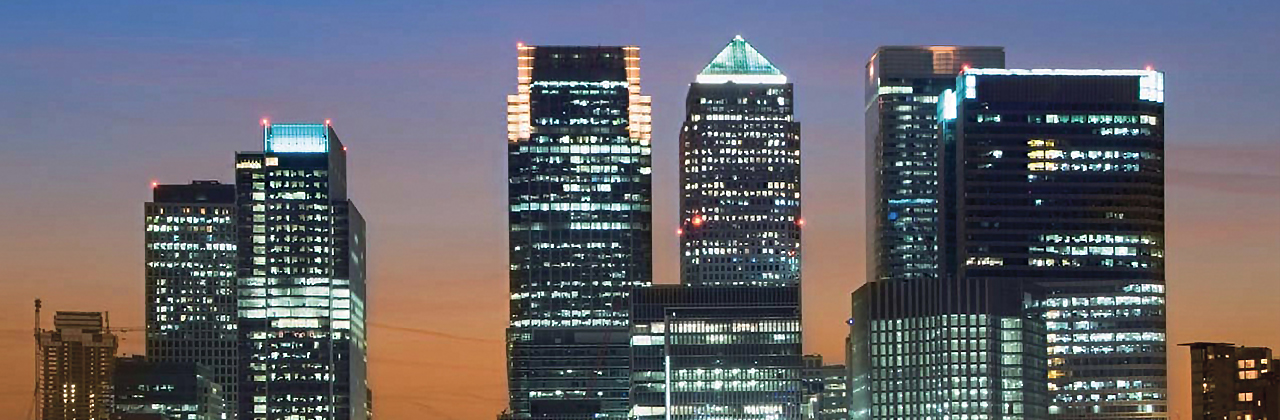
According to The Climate Group, the UK uses around 90 million tonnes of concrete every year to construct the infrastructure we rely on every day (for instance, houses, office blocks, bridges). To put this in context, consider the amount of concrete used to build the structures that make up London’s iconic skyline:
- 50,000* cubic meters of concrete were used to build The Shard
- Over 30,000* cubic meters of concrete were used to build The Lloyd’s Building
- The concrete foundations for The Gherkin are 11 meters deep*, and supported by 1,000 steel piles
*Data from Aspects of London’s History
What makes SCMs key to sustainable construction?
The Climate Group also states that concrete production contributes to 8% of global carbon emissions annually, which is ahead of industrial processes (around 6.5%**) and waste (approximately 3.4%**). With UK construction goals focused on reaching net zero by 2050, SCMs are a way of decarbonising concrete production, one of the building materials we’re most reliant on.
A 2024 analysis by McKinsey states three properties of SCMs that make them so viable:
- Technological maturity, with proven long-term efficacy and predictable performance.
- Current level of integration with existing standards, due to their widespread standardisation and long-standing incorporation into established construction practices.
- Economic viability - they are byproducts of industrial processes and are lower-cost alternatives to clinker.
SCM options
At Heidelberg Materials UK, we’re proud to offer a range of SCMs as part of our commitment to more sustainable concrete production. We supply:
- Ground granulated blast furnace slag (commonly known as ‘GGBS’), a byproduct of iron and steel making.
- Calcined clay, a type of clay that’s been heated to high temperatures to activate its cementitious properties. It’s made from naturally occurring kaolin clay or recycled fired bricks. Whilst currently not widely available in the UK, this is expected to change in the coming years.
- Limestone fines, finely ground calcium carbonate produced from quarry byproducts.
What properties make our SCMs a sustainable choice?
All of the supplementary cementitious materials in our range lower the Global Warming Potential (GWP) of the concrete they’re used in. Typically, the GWP of Portland cement (CEM I) is around 800kg CO₂e per tonne.
| SCM | Carbon impact (CO₂e per tonne) | Typical replacement level |
| GGBS | 155kg | 50-70%* |
| Calcined clay | 48-274kg** | 25-40% |
| Limestone fines | 44kg | 10-15% |
*Up to 95% in special circumstances.
**Varying production methods.
Clinker replacement levels
Each supplementary cementitious material replaces a different amount of CEM I. The higher the GWP difference and replacement level, the lower the carbon footprint of the cement mix - and the more sustainable the end concrete. Use the table below to compare the replacement levels of our SCMs.
| SCM | Typical CEM I replacement level | Clinker replacement level in specialist application |
| GGBS | 50% | Up to 70% |
| Calcined clay | 30-50% | Up to 70% |
| Limestone fines | 20-40% | N/A |
Remember, different applications have different demands for concrete. Our technical team is here to advise you on the best material for your project.
Research and development of SCMs
For sustainable construction to advance, manufacturers and suppliers of building materials must be committed to research and development of new and existing materials.
Calcined clay R&D
We offer calcined clay as part of our evolving portfolio of cement substitutes from our Greenwich ready-mixed concrete plant in London. Lab trials have shown that:
- Replacing up to 30% of CEM I with calcined clay achieves the equivalent strength of GGBS at 28 days
- Relative strength declines more sharply beyond 30% replacement, which helps us to guide optimal levels of usage
Alongside our partners, we also actively take part in numerous live research projects around the UK. One of the flagship studies we’ve been involved in revolved around the suitability of calcined clay concrete mixes to reduce the carbon footprint of construction projects. We supplied C32/40 and C40/50 concrete mixes with 30 per cent calcined clay to the new London Museum in Smithfield, as well as another project with BAM near Liverpool Street. Both projects reported the following results:
- Excellent compaction
- No delays in striking
- Great overall performance
About the study, Daniel Clayton, Concrete Technical Director at Heidelberg Materials, says:
Subsequent laboratory trials have also shown that replacing up to 30 per cent of Portland cement content with calcined clay achieves strengths equivalent to GGBS at 28-days.
This success has strengthened our commitment and standing to deliver lower carbon concrete solutions to the UK construction industry. View the case study for the full details and results of both projects or read more about our sustainability commitments.
The future of SCMs for more sustainable concrete
The more widespread the construction industry’s adoption of SCMs, the closer it will become to meeting decarbonisation - and the legally binding ‘net-zero by 2050’ target.
Sustainable concrete from Heidelberg Materials
In line with developing SCMs to lower carbon emissions in cement production, we’re actively developing evoBuild products, our global range of sustainable building materials. evoBuild is setting a new benchmark for lower carbon concrete through our three flagship products: evoBuild low carbon GGBS, evoBuild low carbon concrete, and evoBuild circular foamed asphalt.


evoBuild low carbon concrete
evoBuild low carbon concrete is available in a range of strengths, offering a CO₂ reduction of at least 30% (compared to a fixed Global Cement and Concrete Association (GCCA) reference value).

evoBuild low carbon GGBS
GGBS is the best cement substitute to produce low carbon concrete. With a safe and secure supply, Heidelberg Materials can offer evoBuild low carbon GGBS as a standalone product or an SCM within concrete.


evoBuild foamed asphalt
evoBuild foamed asphalt is a cold mix asphalt containing up to 95% recycled materials, reclaimed fillers/additives, bitumen, cement, and water. It can reduce the carbon emissions associated with asphalt production and laying by a minimum of 40% when compared with conventional hot mix materials.
Contact us
For more information about our supplementary cementitious materials, evoBuild, or any other products in this article, please get in touch with our team.
Glossary
Carbon capture and storage (CCS): | A technology that traps carbon dioxide from large industrial sources before it enters the atmosphere, then transports it for permanent storage deep underground to prevent it from contributing to climate change. |
Cement powder: | A very fine and dry powder that acts as the essential binding agent in construction. |
Clinker: | The essential nodular intermediate product of cement manufacturing. It is formed when limestone and clay are heated at extreme temperatures (around 1,450°C) in a kiln. This process creates small, dark grey, pebble-like lumps, which can then be finely ground with gypsum to become cement powder (and then cement). |
Global Warming Potential (GWP): | The AHDB define’s global warming potential (GWP) as ‘an emission metric used to quantify the contributions of different greenhouse gases (GHG) to climate change’. |
Supplementary cementitious material: | Materials, often by-products of industrial processes , such as GGBS, which partially replace Portland cement in concrete mixes to decrease the need for energy-intensive clinker. |
Sustainable cement: | A lower carbon building material that typically replaces Portland cement with a supplementary cementitious material to reduce the embodied carbon. Sustainable cement also includes carbon captured cement which has a reduced carbon footprint thanks to CCS technology during the manufacturing process. |
Sustainable concrete: | A lower carbon or circular building material that has a reduced environmental impact compared to standard materials. This could be reduced carbon footprint, , reduced waste, or reduced reliance on virgin resources. |