
Guide to construction aggregates
Construction aggregates are materials fundamental to the UK's building sector. They fulfil all manner of construction projects, from new build foundations to highway resurfacing.
Common construction aggregates include MOT type 1, sand and gravel, which are extracted from quarries and pits and then crushed into different sizes. Aggregates are the most important constituent in key building materials - when bound with cement and water, they produce concrete; when bound with bitumen, they produce asphalt.
A range of aggregates are required to suit the needs of different construction projects. Read on for an overview of the best type for your next construction activity, from one of the UK’s leading aggregate suppliers.
What are construction aggregates?
Construction aggregates are at the core of construction materials used every day to build the infrastructure we’re reliant on, from the foundations of the homes we live in to the major motorways that take us up and down the country.
Boasting high strength and durability properties, aggregates add resilience to the end material. The sheer scale of many construction projects means aggregates are commonly supplied in bulk either in tipper trucks or tonne bags. To reduce our impact on our road network and the associated carbon footprint, we also transport aggregates via rail or barge.
Find out more about aggregates
How are construction aggregates classified?
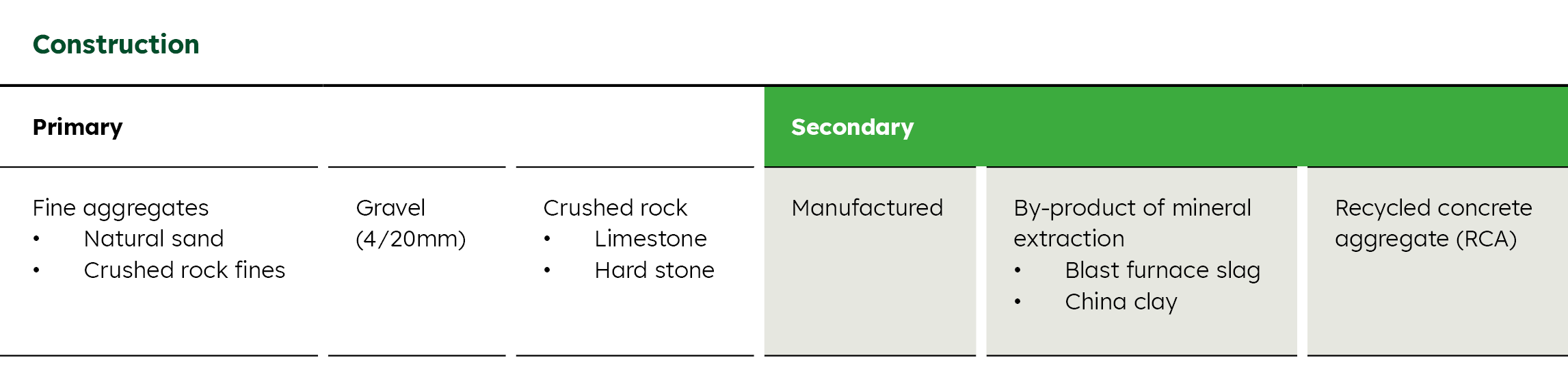
As aggregate suppliers, we know it can be confusing to understand which is best for your construction project. Below, we’ve broken down the ways in which aggregates are classified, starting with their source: primary, secondary, or recycled.
Primary aggregates
Primary aggregates are virgin materials sourced directly from a quarry or dredged from a marine location. Different quarries produce primary aggregates, like sand, gravel, crushed rock, limestone, and granite.
At Heidelberg Materials UK, we have an extensive quarry network which means we can offer a broad range of primary aggregates to projects around the nation.
Secondary aggregates
Secondary aggregates are by-products of industrial processes. By finding new uses for these otherwise waste products, aggregate suppliers are reducing the need for excavation, such as blast furnace slag, pulverised fuel ash (fly ash), china clay waste, colliery spoil, slate aggregate, and incinerator bottom ash.
Recycled aggregates
Recycled aggregates are sourced from construction and demolition waste and include crushed concrete, asphalt, bricks and blocks, along with glass, ceramics, and other end of life materials. Use of these materials reduces landfill use and the demand for virgin resources, making them an eco-friendly and effective alternative in various construction applications.
Learn about recycled aggregates
Construction waste recycling
At Heidelberg Materials UK, our nationwide network of recycling centres are a place for you to dispose of construction waste materials, from concrete and RAP to construction and demolition waste.
You can also collect a range of durable, high-quality materials to use in your next construction project, including:
- Recycled aggregates (6f5 and MOT Type 1)
- Primary aggregates (high PSV, limestone, gravel, and sand)
- Asphalt
- Concrete
With one place to dispose and collect materials, we’re helping to simplify the construction recycling process and support a more sustainable and circular future for the industry.
Find a construction waste recycling centre near you.
How sustainable are construction aggregates in the UK?
Primary aggregates continue to be a popular choice for the majority of construction projects, thanks to hard-wearing properties that make them suitable for these applications. The advancements in the sourcing and processing of recycled aggregates, plus new sources of secondary aggregates, are proof of how the industry is balancing demand for virgin materials and reducing waste.
According to a 2022 report by the Mineral Products Association (MPA), non-primary materials accounted for over 30% of Britain’s total demand for aggregates. The recovery of construction, demolition, and excavation wastes, like concrete and old rail track ballast, contributed to 60.3 million tonnes of recycled aggregates being put back into the aggregates economy. With figures like these, we can see how far the UK has come in pushing a more sustainable aggregates economy.
Head to our sustainability page for more details on our plans for the construction sector in the UK.
Coarse and fine construction aggregates
Aggregates can be further classified as either coarse or fine.
Coarse aggregates
Coarse aggregates are made from materials that have been crushed and screened to a size greater than 4mm and are typically 20mm or larger.
When coarse aggregates are bound with cement and water, concrete is produced. Concrete is a material used in construction and is also the most common material found in the solid foundations of buildings, demonstrating the importance of aggregates to the sector.
Fine aggregates
Fine aggregates are the smallest type of aggregate used in construction. Sand and crushed rock fines are two examples of materials in this category, which are generally smaller than 4mm in diameter.
Fines include both recycled and natural sand, gravel and crushed rock. Fine aggregates are most commonly used in concrete (this has both fine and coarse aggregates in the mix), mortar, asphalt, and drainage in the construction sector.
Choosing the right aggregate for construction projects
As a leading aggregates supplier to the construction sector, Heidelberg Materials is best positioned to advise you on the type of construction aggregate you should use for your project. Below, we’ve highlighted three common types of construction projects our customers ask for aggregate advice on. We also encourage you to contact us with your specific requirements to make sure you choose the right aggregate for your application.
1. Road construction
A road is structured in layers and designed to distribute traffic loads, provide a stable and smooth driving surface, and withstand environmental stresses. From bottom to top, the layers are the subgrade, sub-base, base course, and surface course. Each layer has a specific function, with all working together to ensure the road's durability and long-term performance.
Subgrade
The subgrade is the natural ground or soil upon which the road is built. It provides the initial support and stability for the entire pavement structure. A stable subgrade is crucial for preventing the road from settling or cracking due to uneven ground conditions.
Sub-base
The sub-base layer, often made of granular materials like crushed stone or gravel, is placed on top of the subgrade. The sub-base is a hydraulically bound, engineered, graded aggregate mixture which provides a strong, stable, and durable foundation for roads and other surfaces. It creates a compact, load-bearing layer which distributes and supports the weight from traffic. This provides the foundation for the subsequent asphalt layers.
Base course
This is the first bitumen bound layer in the structure and is the primary structural layer. It distributes traffic loads from the surface and binder courses to the subgrade and sub-base below. A strong base course is essential for preventing rutting, cracking, and other forms of pavement distress.
Binder course
This is usually the second bituminous layer in the structure. Consisting of a richer mixture of bitumen and varying aggregate sizes, the binder course serves as a transition layer. It distributes load from the surface course to the underlying base course and creates a stable foundation for the final surface course.
Surface course (wearing course)
The surface course is the top layer of the road that directly interacts with traffic. It provides a load-bearing , skid-resistant surface for vehicles and protects the underlying layers from wear, water, and weather damage. Importance: The surface course's durability and skid resistance are critical for safety and driving comfort.
For more details on aggregates for road construction, please view our road, rail, and ports page.
2. Railway ballast
Railway or track ballast needs to be robust, durable, and resistant to high load. Primary aggregates, like granite, are favoured for many types of railway construction projects. The aggregate particles lock together to produce a strong, durable material targeted to withstand the loading of our rail network.
3. Drainage
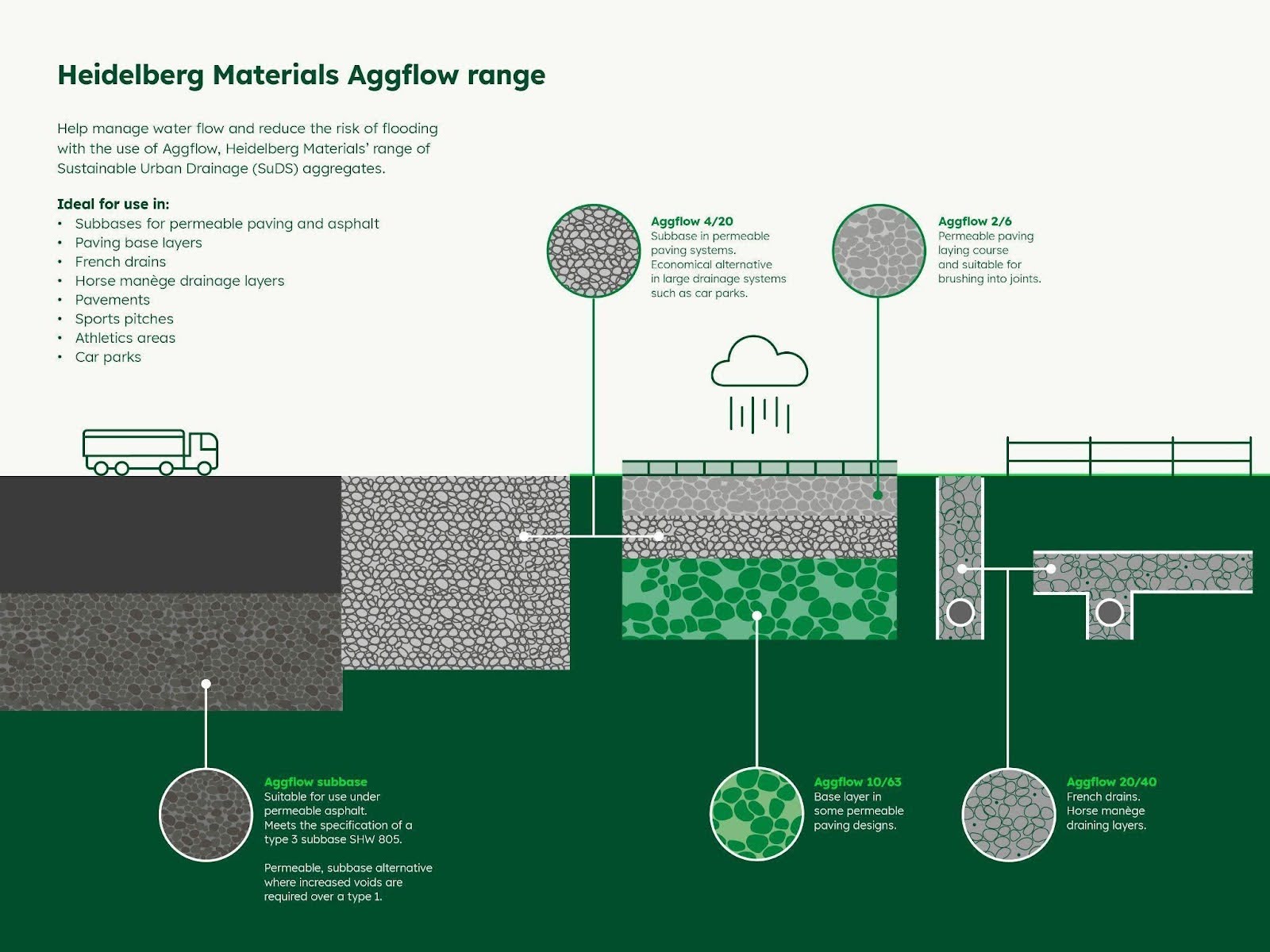
Aggregates play a key role in improving the properties of drainage and water management for all sorts of infrastructure projects. When drainage aggregates are used within a Sustainable Urban Drainage System (SuDS), water can move quickly and easily through the layers to a watercourse system that reduces the risk of flooding.
Aggregates for flood and coastal erosion
Aggflow
Our Aggflow range of SuDS aggregates is specially designed to improve the quality and management of water in paving, asphalt, drains, sports pitches, and more. We’ve created a range including a 4/20 aggregate mix or a Type 3 sub-base, with bespoke products available on request. All Aggflow aggregates meet the necessary specifications for SuDS systems, as well as Interpave's latest guidance.

Construction aggregates from Heidelberg Materials
With access to our 50-strong network of quarries across the UK, the Heidelberg Materials team is primed to advise you on the best aggregates for your next construction project. Get in touch for more information about the aggregates we supply and the properties that make them so trusted and renowned by the UK’s construction sector.