Heat conductive concrete
Discover our range of heat conductive concrete products, specialised solutions designed to enhance the thermal performance of buried electrical cables.
Our innovative concrete conducts heat efficiently, making it ideal for projects where underground high-voltage and ultra high-voltage cables require a unique solution for bedding and backfill materials.
Ensuring consistent thermal conductivity, this ready-mixed concrete improves the efficiency of power cables by effectively dissipating heat. This ensures the conductor temperature is minimised, resulting in optimised power capability.
Heidelberg Materials' heat conductive concrete is available from all our static and mobile production plants to provide energy-saving benefits for your project.
What applications can heat conductive concrete be used for?
Heat conducting concrete is ideal for applications where consistent and high performing infill is required, including:
- Off-shore wind
- On-shore wind
- Solar farms
- Nuclear power plants
- Modular nuclear reactors
- Data centres
- Substations
- Battery storage facilities
- Subsurface power infrastructure
Benefits of heat conducting concrete
Projects that use our heat conducting concrete will experience a range of benefits, such as:
- Improved heat dissipation for HV and UHV cables
- High heat conduction after drying
- Reduction in magnetic field strength for alternating current
- Increased power capacity
- Reduction of conductor cross-section
- Possibility to switch to aluminium conductors
- Mitigation of “hot-spots”
Our heat conductive concrete range
We offer two concrete solutions that provide low thermal resistance: PowerCrete® and CableCem®.
PowerCrete®
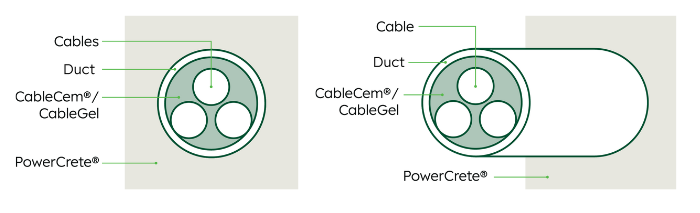
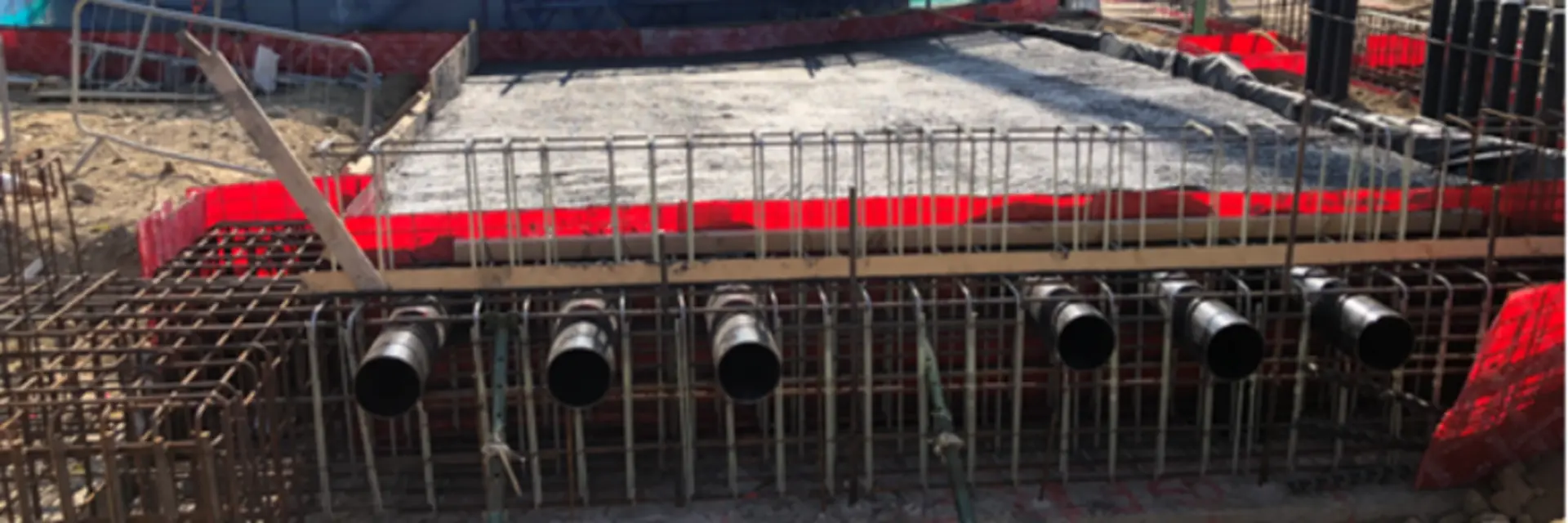
PowerCrete is a robust, high performance heat conducting concrete primarily used as a bedding and infill material for underground HV and UHV cabling.
Advantages of PowerCrete
The special material properties of PowerCrete result in low heat transmission resistance. As a result, heat generated due to energy transmission is dissipated effectively and the conductor temperature is reduced, increasing the power capability of the cable run.
The workability of PowerCrete can be adjusted to meet the demands of different applications. For instance, a free-flowing consistency is ideal for embedding and encapsulating ducts and cables, while being easy to place, finish and compact.
CableCem®
CableCem is a heat conducting grout developed as an infill material for jacket tube systems.
Advantages of CableCem
The grout shares the same main benefits as our heat conducting concrete and also has excellent free-flowing properties. It’s well-suited for infilling the residual annular space between the cable and the jacket tube.
The low thermal resistance of CableCem ensures excellent heat dissipation, reducing capacity loss in the cable line and permanently increasing the power capability of the cable run. We offer the heat conducting grout in a number of options with a range of thermal resistances - please contact us for more details.
Where our heat conducting concrete has been used
Hurst National Grid Sub-Station

This transformative seven-year project to rewire South London through deep underground tunnels used PowerCrete to enhance power delivery and reliability.
Case study: Hurst National Grid Sub-Station
Offshore Inch Cap Wind Farm, Edinburgh
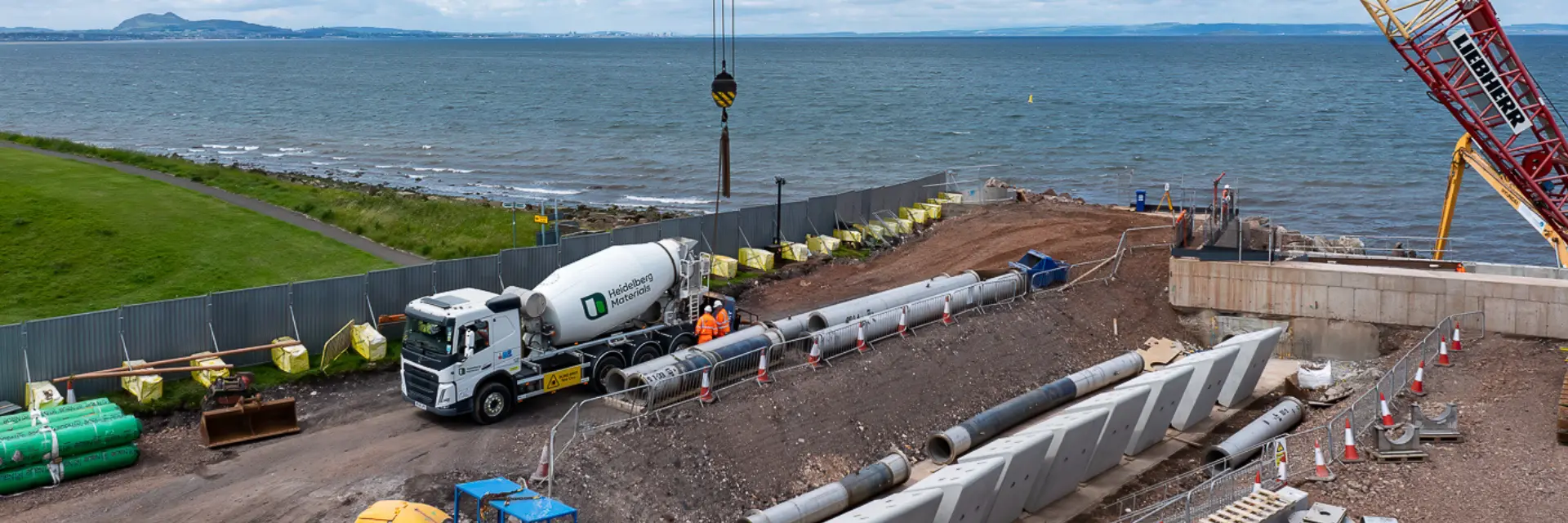
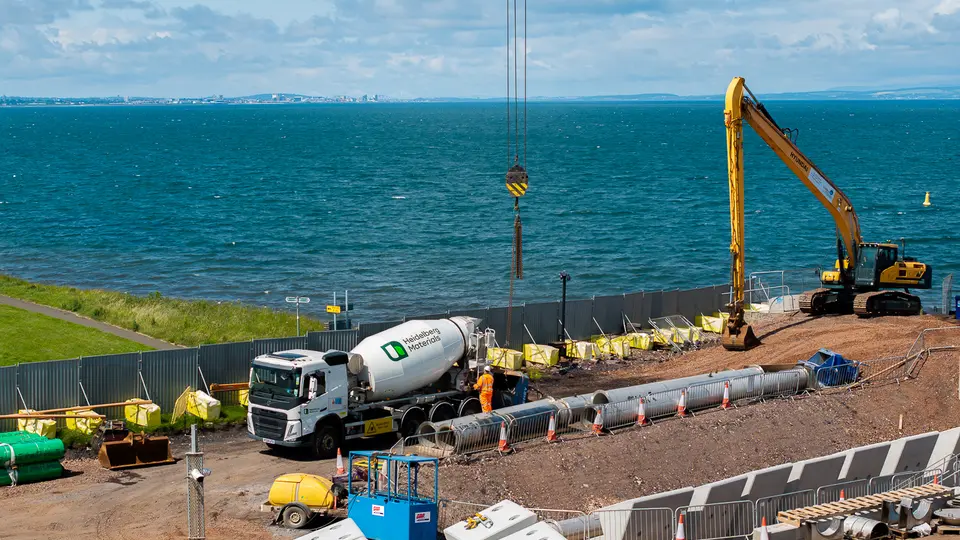
Our specialist PowerCrete concrete is supporting the landfall connection for Inch Cape Offshore Wind Farm, one of Scotland’s largest renewable energy projects by enhancing underground cable performance and helping deliver low-carbon power to 1.6 million homes.
Uskmouth Substation, Newport
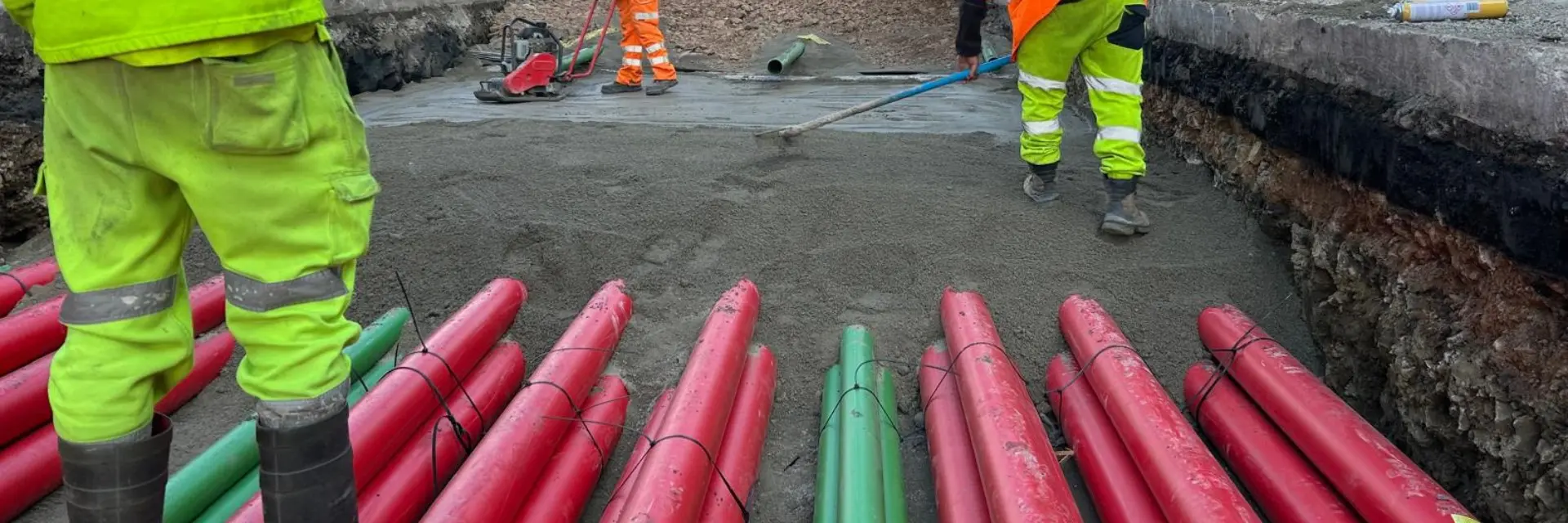
Between March and May 2025, we supplied 1,000m3 of PowerSand® CBS Extra for the development of a major battery storage facility, a landmark project in the UK’s renewable energy transition.
Case study: Uskmouth Substation
Our accreditations
Heidelberg Materials is a member of the Quality Scheme for Ready-Mixed Concrete (QSRMC) and all our heat conducting concrete products carry this certification.
From the experts: Heat conducting concrete
“PowerCrete was exactly what we needed for Inch Cape and handled the technical demands of the cable installation really well.
“The tidal schedule added some complexity, but the Heidelberg Materials team coordinated deliveries seamlessly. It’s reassuring to work with a supplier who truly understands site pressures and partners with you to deliver.”
Michael Kelly, Commercial Manager at Charles Brand
“Heidelberg Materials’ PowerSand CBS Extra provided the performance we needed for safe and efficient cable installation, and their team was incredibly responsive throughout.”
Rhys Roberts, Contract Manager, at Jones Bros Ruthin Civil Engineering Ltd
Why you can trust Heidelberg Materials

Quality-Assured Heat Conducting Concrete
Our range of ready-mixed concrete has been tested to the highest standards, with a solution for every project.
Extensive Product Availability
Choose from 178 static and mobile plants across the UK for your home use concrete supply.
Bespoke Concrete Products
Select your ideal additives, admixtures, cement and aggregates.

Dedicated Sales Support
We integrate sales management with every order for seamless delivery.

National Delivery Fleet
Trust our 1,200 vehicles, 140 rail freight wagons, and 4 locomotives to safely deliver your concrete.
Contact details
Contact the team nearest to you using the details in the table below. Alternatively, please complete the contact form at the bottom of this page.
Heat conducting concrete FAQs
- What is the difference between PowerCrete, PowerSand CBS, and PowerSand CBS Extra?
-
PowerCrete is a high-performance heat-conducting concrete ideal for HV and UHV cable bedding.
PowerSand CBS is a certified cable sand for backfilling, while PowerSand CBS Extra offers enhanced thermal performance and a lower carbon footprint.
- How does PowerCrete improve cable performance?
-
PowerCrete reduces thermal resistance, dissipates heat efficiently, and increases cable power capacity. It also supports the use of aluminium conductors and mitigates hot-spots, making it ideal for energy infrastructure.
- Are PowerCrete and PowerSand CBS compliant with industry standards?
- What are the environmental benefits of heat conducting concrete?
-
PowerCrete offers lower thermal resistivity than traditional cement bound sands and helps reduce the carbon footprint of infrastructure projects.