Around half of the carbon emissions associated with asphalt production and laying come from the fuel used in manufacture, so reducing the temperature at which asphalt is produced is key. But using long-life products to increase the durability of the asphalt is also important as this reduces the number of maintenance interventions, supporting the circular economy and reducing emissions.

Hanson has developed a number of innovative asphalt solutions that can help reduce the carbon footprint of road construction and maintenance schemes, all of which can be produced using its ERA warm mix process, which cuts CO2 emissions by up to 15%. 
 

Temperature reduction
Increased durability
Graphic of a blue cloud with the words 'Reducing Emissions' and a downward green arrow listing pollutants NOx, SOx, CO, VOCs, and PMs.
Lower emissions
Innovative
Lower carbon asphalt
A414 upgrade in Hertfordshire

A414 upgrade in Hertfordshire

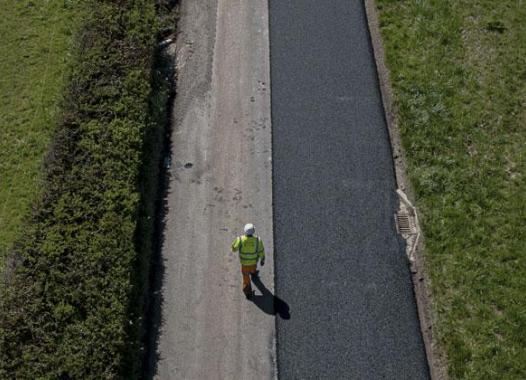
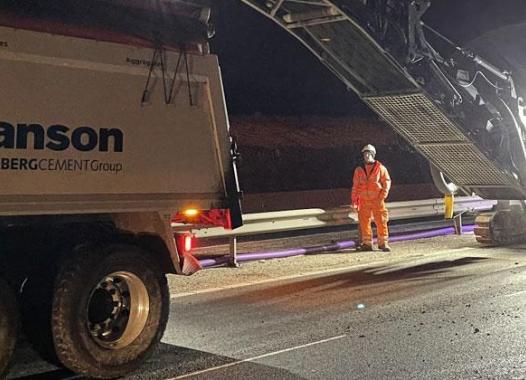
The A414 upgrade in Hertfordshire showcases a range of our innovative, durable, lower carbon asphalt solutions to help National Highways meet its net zero carbon ambitions.

ERA warm mix asphalt (WMA)

The use of warm mix asphalts (WMAs) cut CO2 emissions by around 15% and, importantly, can be used to produce a number of different products with recycled or secondary content as well as those that offer increased durability, enhancing these savings. 

While hot mix asphalt, produced at temperatures in excess of 160°C, is currently the default asphalt type specified in the UK, this is changing with National Highways now encouraging the use of WMAs as standard on the strategic road network. 

Our ERA warm mix process can be used to produce a wide range of asphalts and offers a number of additional benefits including:

  • Faster setting times
  • Increased durability through reduced oxidation
  • Reduced steam production in wet weather
  • Reduced odour on site
  • Improves adhesion as both liquid antistrip and warm mix additive
  • Less fumes: a 10°C reduction in mix temperature reduces fuming by ~50%

Temperature reduction
Increased durability
Cuts CO2 emissions up to 15%
Faster setting times
Recycled

Warm mix asphalt, Dorset Highways Strategic Partnership Project case study

Reducing carbon emissions and improving efficiencies, National Highways Areas 6 & 8 Project case study

CarbonLock (biogenic asphalt)

CarbonLock includes biogenic material that absorbs and ‘locks in’ CO2 throughout its life, even when it is recycled. It is also produced using our ERA warm mix process, which allows the asphalt to be manufactured at a lower temperature. As a result, the product provides at least a 25% reduction in carbon emissions compared with standard hot mix.

The low void, high bitumen content of the asphalt, coupled with the lower production temperatures, also creates a very durable material – one which can also be laid as a single layer product, increasing efficiency and reducing disruption for road users.
 

Increased durability
CO2 emissions up to 25%
Temperature reduction
Recycled
Reduced emissions asphalt using ERA warm mix technology

Reduced emissions asphalt using ERA warm mix technology

Our new CarbonLock biogenic asphalt has been used in Dorset to reduce whole-life carbon emissions and enhance durability of the new road surface.

AgeLast (Enhancing durability)

AgeLast asphalts contain an additive that reduces the rate of bitumen ageing to delay the onset of embrittlement and prolong the life of asphalt surfacing, reducing the need for intervention and associated carbon emissions. They are produced using our ERA warm mix process, reducing the CO2 emissions associated with production, compared with traditional hot mix asphalt.

Graphic of a blue cloud with the words 'Reducing Emissions' and a downward green arrow listing pollutants NOx, SOx, CO, VOCs, and PMs.
Reduces emissions