

Fibre reinforcement is used as an alternative to steel reinforcement in an increasing number of concrete applications. Fibres such as steel, glass, and synthetic (polypropylene) are added to concrete mixes to increase its tensile strength. As a result, the load-bearing capacity of the concrete is increased, helping to prevent cracks and structural failures. Once reserved for niche applications, the speed, safety, and sustainable properties of fibre reinforcement has seen its use in more mainstream applications grow.
What is fibre reinforcement?
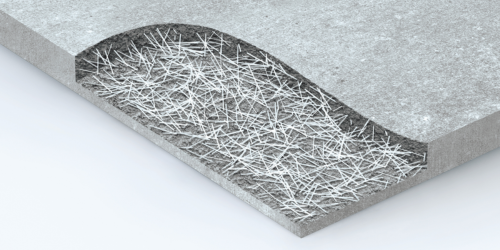
When short, discrete fibres are added to ready-mixed concrete, it’s known as fibre reinforcement. The fibres are distributed throughout the entire concrete mix to enhance the overall structural performance of the concrete. By creating a 3D reinforcement network, the fibres bridge micro-cracks before they become large cracks, which strengthens the crack resistance, durability, and tensile strength of the concrete.
Find your local concrete team
Use our interactive map to see where your local customer support team is and get in touch with our concrete experts.
Structural vs non-structural fibres
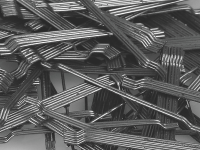
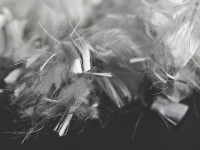
The fibres are classed as structural or non-structural. Polypropylene macro and steel are examples of structural fibres, which are manufactured for specific purposes.Polypropylene micro-fibres are a type of non-structural fibre, which can be added to almost any conventional concrete mix.
Macro fibres
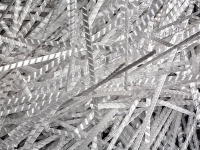

Steel fibres

Micro fibres

Fibre reinforced concrete from Heidelberg Materials
Our own fibre reinforced concrete, FibreCrete, is manufactured from advanced fibre technologies. FibreCrete reduces the potential for early-age plastic shrinkage cracking in the concrete, driving efficiencies in construction projects.
The advantages of fibre reinforcement for construction
No matter the application, fibres bond well within concrete mixes, making them easy to work with. If properties like high impact resistance, construction efficiency, and fire resistance are important to your construction project, fibre reinforced concrete is the ideal choice.
Strength
The 3D network of reinforcing fibres creates a ‘self-reinforced’ material, which increases the longevity of the concrete. The network bridges micro-cracks less than 0.1mm to prevent them from developing further. Fibre reinforced concrete also has high levels of durability, crack resistance, and load-bearing capacity. When compared to traditional steel reinforcement, it’s less vulnerable to fatigue and corrosion.
Speed
Unlike steel mesh, fibre reinforcement doesn’t require cutting, placing, and fixing. This eliminates the need for mesh storage, reduces time and effort of preparation and installation, and removes the potential safety hazards of handling and cutting steel. The fibres are added directly* into the concrete mix, meaning they’re already in place when the concrete is poured, pumped, or spread.
Due to its crack and shrinkage resistant properties, large ‘jointless’ concrete slabs can be used with fibre reinforced concrete. By reducing the time needed to cut contraction joints at a later stage in the process, the amount of time and labour needed on site for this activity is reduced, too.
*Fibres can be added to the concrete truck on site or at the batching plant.
Safety
Fibre reinforcement turns concrete into a ductile material that can absorb energy. Its ability to experience tensile strength without fracturing prevents sudden and brittle failures, which could otherwise lead to accidents caused by cracks, chips, and falling debris.
Where synthetic micro-fibres such as polypropylene are used in the concrete mix, the risk of explosive spalling is reduced. If extreme heat-induced water vapour pressure is trapped inside dense, high-strength concrete that catches fire, the surface concrete can break away suddenly and violently. Multiple concrete layers can be broken off during this process, known as ‘explosive spalling’, which can lead to severe structural damage and potential collapse. Where fire resistance is particularly important (for instance, in structures like traffic tunnels), fibre reinforced concrete is an ideal choice.
Other key benefits of polypropylene fibres
Non-structural polypropylene fibres are a lightweight alternative to steel mesh that increase the homogeneity of the concrete mix. By dispersing throughout the mix, they block water channels and reduce the rate of bleeding. As a result, polypropylene fibres improve the concrete's durability. Resistance to impact, abrasion, and in conjunction with air entraining admixtures, freeze-thaw cycles are all improved. At the same time, they reduce water permeability.
The fibres are ideal for:
- High-traffic surfaces, like pavements. They are also ideal to replace mesh on small scale home projects.
- Structures where fire-resistance is a priority, such as tunnel linings.
- Marine structures, including sea defences and sea walls.
The difference between micro, macro, and steel fibres
When considering fibre reinforcement, it’s important to understand the different types on offer: Micro and macro polypropylene fibres, and steel fibres. Use our table below to compare the fibres and understand their suitability for your application.
Product name | Polypropylene micro fibres | Polypropylene macro fibres | Steel fibres |
Benefits | Increases surface durability Reduces plastic shrinkage Improves fire resistance | Replaces steel mesh or steel fibres for structural integrity Easy to handle and finish | Replaces steel mesh for structural integrity |
Used for | Controlling shrinkage cracks in the first few hours of concrete curing | Providing structural reinforcement Improving residual strength after cracking | Providing structural reinforcement Improving residual strength after cracking Heavy duty flooring |
Mortar Thin toppings Floor slabs Motorway barriers | Concrete slabs Industrial floors Sprayed concrete | ||
Size | Finer than a hair, with a typical diameter between 18 and 32 microns | Coarse, approximately 0.5 to 1.0mm in diameter and up to 65mm long | |
Certifications |
| BBA Certified and approved by NHBC for new build floors | |
In short, if crack prevention is a priority, choose micro fibres. If load carrying is the priority, then macro or steel fibres are more suitable. Micro and macro fibres are frequently applied together to reinforce all of these qualities. Both steel and macro polypropylene fibres are British Board of Agrément certified and approved by the NHBC for use in a concrete topping over block and beam flooring systems in new build homes.
Comparing fibre reinforcement with traditional steel reinforcement
Choosing between fibre and steel reinforcements isn’t a one-size-fits-all process. You should choose the reinforcement that produces a concrete mix with the desired properties for the application.
Fibre reinforcement is more suited to slabs and thin applications than steel, due to its superior crack control and speed of installation. Given its higher tensile strength and load-bearing capacity, steel reinforcement is likely to be the better option for heavy-duty structural applications (like dams and power plants). Please speak with our technical team for support and advice on choosing the right reinforcement for your construction project.
How fibre reinforcement reduces cost
Cost is another reason that makes fibre reinforcement a popular choice in construction. BS 8500 is the British Standard for concrete specification and is designed to protect steel in infrastructure. By removing the need for traditional steel mesh, the concrete specification can be reduced - along with labour costs, and time to install and handle the material.
It’s worth noting that the additional cost of fibre reinforced concrete (per m3) is higher than that of standard concrete reinforced with steel. However, steel needs to be delivered and then stored on site. It also requires time and energy to cut it and move it around, two activities that have the potential to be dangerous.
Many of our customers choose FibreCrete to reduce these risks. The reinforcements are delivered in the pre-mixed concrete, which can save time and money within the project schedule and create a safer working environment.
Lee Baldwin, Head of Customer Technical Support
What are the sustainability benefits of fibre reinforcement?
Along with cost savings, fibre reinforced concrete offers opportunities to reduce the environmental impact of traditional reinforcement materials and methods.
- Fibre reinforced concrete is easier to recycle than steel mesh reinforced concrete. It can be broken up and crushed back down to an aggregate source with less effort and cost.
- Macro polypropylene fibres show an embodied carbon reduction of up to 90% when compared directly with the equivalent steel mesh.
- Concrete reinforced with fibres omits the need to cut or shape steel, which eliminates material waste on site.
- Fibres allow for thinner and lighter structural components, which lowers material usage, transport emissions, and the overall carbon footprint of the concrete. Learn about low carbon concrete options by viewing evoBuild low carbon concrete.
Applications of fibre reinforcement
Given its advantages, it’s easy to see why fibre reinforcement is increasingly being chosen in construction. Common applications include:
Ground-bearing slabs
Fibres improve the durability of the slabs whilst reducing carbon footprint, as well as speeding up the construction process and reducing the safety risks on-site.
Sprayed concrete in tunnels
Steel or macro-synthetic fibres provide high post-crack toughness and allow for faster, safer installation. The addition of micro polypropylene fibres will reduce the risk of explosive spalling in fires.
Precast concrete elements
From pipes and manholes to septic tanks, fibres are used to control shrinkage and enhance durability.
Get in touch
Understand the suitability of fibre reinforcements to your next project by speaking with our technical team.